Household heroes: Startups in the modern home
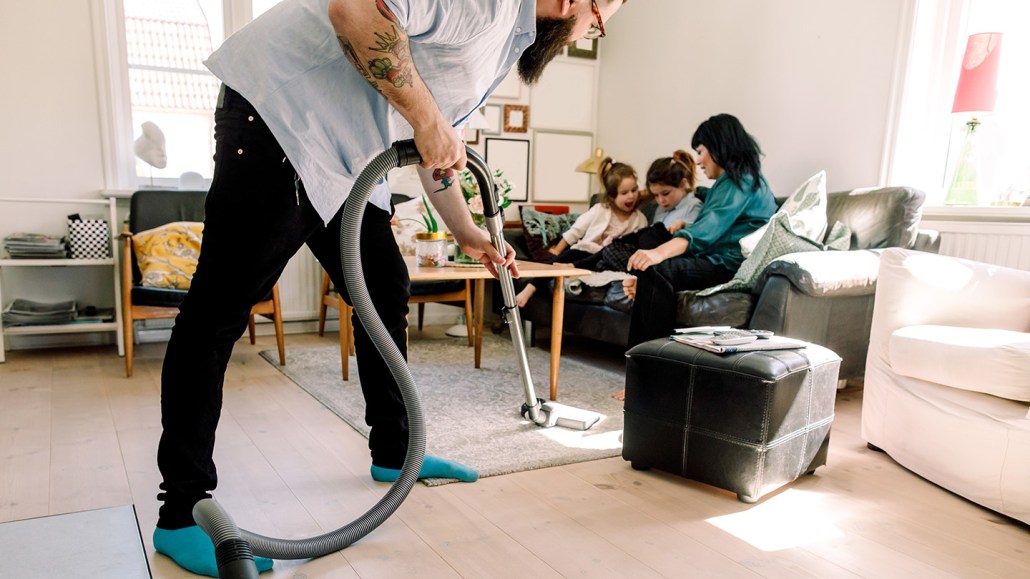
Married U.S. women still spend more time on housework than married men. But the gender gap in time spent on traditionally feminine chores, such as cleaning and laundry, is shrinking.
Maskot/Getty Images Plus
By Susanna Camp
New data suggests that married men are stepping up to the plate (and the sink, and the washing machine), narrowing a decades-long “chore gap” that has historically hampered women’s workforce participation and societal mobility. New tools for chore-sharing are entering the market. SN’s Sujata Gupta sums it up tidily.
🧺 Laundry logic: Quantifying labor that makes households run
A multidecade analysis of U.S. time-use data released by the U.S. Bureau of Labor Statistics reveals that married men have significantly increased their contribution to housework in the past two decades. Researchers found that from 2003 to 2005, married women spent an average of 4.2 hours per week to every one hour their male spouses spent on tasks like meal prep and tidying. By 2022 to 2023, that number had shrunk to 2.5 hours to every one hour. It’s still more than twice, but we’ll take the win.
This study highlights that men have become more involved in physical chores like laundry and cleaning. Yet other studies show that women still shoulder a disproportionate share of the “cognitive labor” or mental load required to manage a household. The lead researcher attributes some of the shift to new habits men developed during the COVID-19 pandemic, with more time spent in the home. Ultimately, the findings suggest that as gender roles evolve, the division of labor is shifting toward a more equitable balance.
🏠 Household heroes: Startups in the modern home
While families figure out who’s doing the dishes, these startups are helping manage the workload with household management apps:
- FamilyWall offers calendars, messaging, meal planning, budget tracking, task lists and location sharing. Based in France, the company raised over $2 million in a Series A round in 2014 before rolling out their consumer app with both free and paid tiers.
- San Francisco–based Maple integrates scheduling, a meal planner, recipes and chores sheets. The company raised $3.5 million in a seed round in 2021.
- Sweepy: Designed for high-frequency cleaning tasks, this app gamifies chores. It allows users to visualize the cleanliness of a room and distributes tasks based on who is available. The app includes features that appeal to users with ADHD and autism, according to reviews. Sweepy was founded by a French couple who bootstrapped the financing; it remains private while reportedly profitable.
In our household, we’re daydreaming of a future where we can outsource the chores to our gender-free humanoid robot.
Disclaimer: The Science News Investors Lab newsletter is for informational purposes only and does not constitute investment advice. Society for Science and Science News Media Group assumes no liability for any financial decisions or losses resulting from the use of the content in this newsletter. Society for Science and Science News Media Group do not receive payments from, and do not have any ownership or investment interest in, the companies mentioned in this newsletter. Please consult a qualified financial advisor before making any investment decisions.