Paving a (plastic) path to profit in Hawaii and beyond
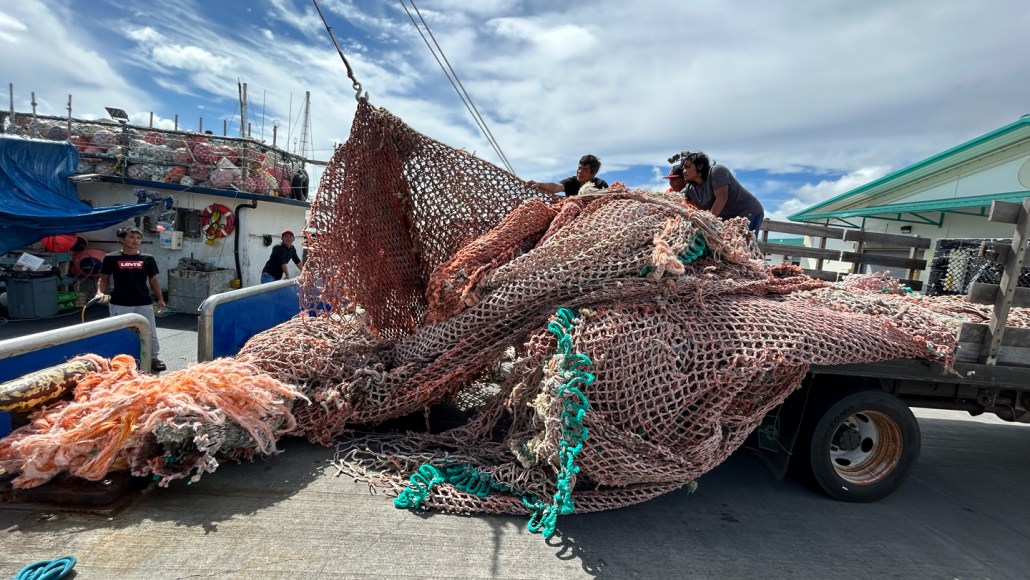
About 90 tons of plastic, including old fishing nets, have been hauled from the waters and beaches of Hawaii. Some of it has been turned into pellets to be added to asphalt and tested in paved road sections on Oahu.
Courtesy of the Center for Marine Debris Research
By Susanna Camp
Hawaii, among the most isolated island chains in the world, serves as a microcosm for tackling global challenges through innovative solutions. Instead of letting ocean plastics degrade its ecosystem, they’re now integrating them into the very roads that residents drive on. For the infrastructure investor, this represents the transition of “trash” into a high-performance building material. Sara Novak reports for SN on how Hawaii is literally paving the path to a circular economy.
🛣️ Chemistry meets construction
Hawaii’s leadership in sustainability is driven by a unique combination of geographical necessity, aggressive legislative goals and the revival of Indigenous ecological knowledge. The Nets-to-Roads project, a joint effort between Hawaii Pacific University and the state’s transportation department, has moved beyond the laboratory and onto the highway. While testing various mixes of plastic, including never-used rubber and recycled fishing nets, as an additive to asphalt, researchers have discovered that the pavements don’t shed significant microplastics into the environment. Tests on durability of these recycled net–containing roads are ongoing.
🏎️ Paving a path to profit
For the construction industry, this isn’t just about green optics, it’s a welcome innovation in the global asphalt market slated to surpass $83 billion by 2030. As federal and local governments implement stricter sustainability mandates, the market for recycled materials is expanding rapidly. Plastic additives offer a dual advantage: they reduce the reliance on virgin petroleum products while potentially lowering maintenance costs through increased durability. A product that is both cheaper to source and longer-lasting is a rare win-win for municipal budgets and private contractors alike.
👩✈️ Plastic pilots
Several key players are already scaling this synthetic revolution across the global infrastructure landscape:
- Dow (NYSE: DOW): This chemical titan has piloted recycled plastic roads on four continents. Dow reported 2025 revenue of roughly $40 billion. The company is forging collaborations to reduce excessive packaging and recycle mixed plastics, among other innovations.
- MacRebur is a Scotland-based startup and a “pure play” leader (jargon alert: these companies focus exclusively on one specific industry sector, product or service, rather than diversifying across multiple areas), holding patents for plastic additives that replace a portion of the oil-based bitumen in asphalt. MacRebur has raised over $6 million via crowdfunding.
- Orbia (BMV: ORBIA) is a chemical company and majority stakeholder in PlasticRoad, a company that scales the production of modular, climate-adaptive roads made from 100% recycled plastic. Their roads, piloted in Europe and North America, contain hollow elements that provide integrated stormwater storage and cable management. Orbia reported revenues of over $7 billion in 2025.
The path to a truly circular economy is finally being paved.
Disclaimer: The Science News Investors Lab newsletter is for informational purposes only and does not constitute investment advice. Society for Science and Science News Media Group assumes no liability for any financial decisions or losses resulting from the use of the content in this newsletter. Society for Science and Science News Media Group do not receive payments from, and do not have any ownership or investment interest in, the companies mentioned in this newsletter. Please consult a qualified financial advisor before making any investment decisions.