463 results
463 results for: Dolphins
- Animals
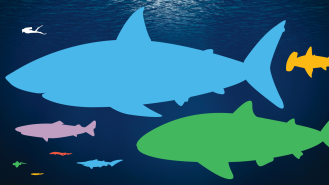
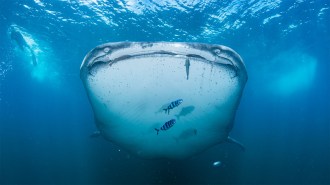
Compare shark sizes on our infographic
As Jaws celebrates its 50th anniversary, Science News explores the vast range of shark sizes, from megaladon to the dwarf lanternshark.
- Health & Medicine
What freediving can reveal about human health — and our limits
The practice of freediving is teaching physiologists how humans stretch their physical and mental limits, which in turn may improve treatments for lung and heart ailments.
- Health & Medicine
Bird flu in cows shows no signs of adapting to humans — yet
Easy replication in cattle mammary glands means H5N1 bird flu is under no evolutionary pressure to adapt to spread easily in humans.
- Animals
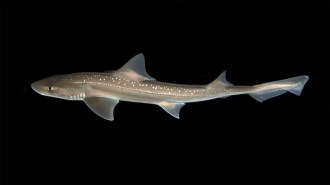
Is that shark ticking? In a first, a shark is recorded making noise
The ocean can be a symphony of fish grunts, hums and growls. Now add tooth-clacking sharks to the score.
- Animals
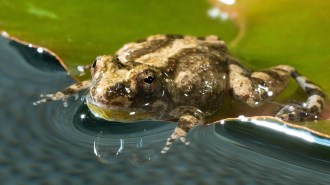
Cricket frogs belly flop their way across water
Cricket frogs were once thought to hop on the water’s surface. They actually leap in and out of the water in a form of locomotion called porpoising.
- Animals
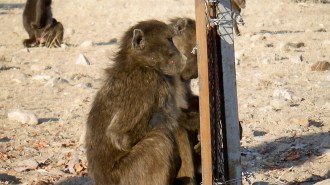
Wild baboons don’t recognize themselves in a mirror
In a lab test, chimps and orangutans can recognize their own reflection. But in the wild, baboons seemingly can’t do the same.
- Animals
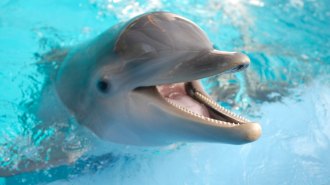
Dolphins’ open-mouth behaviors during play are like smiles, a study claims
Experts urge caution in calling bottlenosed dolphins’ gesture a humanlike “smile,” but agree it seems to be important for how the animals communicate.
- Animals
50 years after ‘Jaws,’ sharks face their own terror
Humans have driven sharks and their cousins to the brink of extinction. The health of the entire ocean is at stake.
- Animals
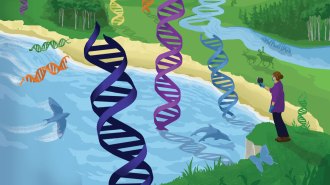
Stray DNA is all around us. It could revolutionize conservation
Environmental DNA harvested from the ocean, land and air can help scientists monitor wildlife. The challenge is figuring out how to interpret this eDNA.
- Paleontology
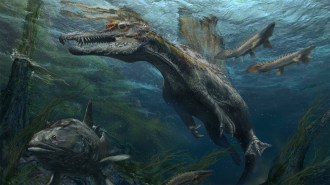
Could Spinosaurus swim? The fierce dinosaur ignites debate
Researchers are still divided about whether Spinosaurus was a swimmer or a wader. What’s clear is that confirming the first swimming dinosaur would be a game-changer.
- Health & Medicine
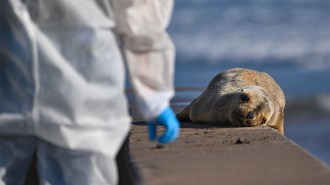
Bird flu has been invading the brains of mammals. Here’s why
Although H5N1 and its relatives can cause mild disease in some animals, these viruses are more likely to infect brain tissue than other types of flu.
- Life
This biophysicist’s work could one day let doctors control immune cells
The Stanford biophysicist thinks that understanding the mechanics of cell movement could allow scientists to manipulate immune cells.