Skip to content
Subscribe today

Every print subscription comes with full digital access

Subscribe Now
  • All Topics
    • Health
    • Humans
      • Anthropology
      • Health & Medicine
      • Archaeology
      • Psychology
      • View All
    • Life
      • Animals
      • Plants
      • Ecosystems
      • Paleontology
      • Neuroscience
      • Genetics
      • Microbes
      • View All
    • Earth
      • Agriculture
      • Climate
      • Oceans
      • Environment
      • View All
    • Physics
      • Materials Science
      • Quantum Physics
      • Particle Physics
      • View All
    • Space
      • Astronomy
      • Planetary Science
      • Cosmology
      • View All
  • Magazine
  • Menu
    • All Stories
    • Multimedia
    • Reviews
    • Puzzles
    • Collections
    • Educator Portal
    • Century of Science
    • Unsung characters
    • Coronavirus Outbreak
    • Newsletters
    • Investors Lab
  • About
  • SN Explores
  • Our Store
Donate
Home INDEPENDENT JOURNALISM SINCE 1921 SIGN IN
Home INDEPENDENT JOURNALISM SINCE 1921
  • All Topics
    • Earth
      • Agriculture
      • Climate
      • Oceans
      • Environment
    • Humans
      • Anthropology
      • Health & Medicine
      • Archaeology
      • Psychology
    • Life
      • Animals
      • Plants
      • Ecosystems
      • Paleontology
      • Neuroscience
      • Genetics
      • Microbes
    • Physics
      • Materials Science
      • Quantum Physics
      • Particle Physics
    • Space
      • Astronomy
      • Planetary Science
      • Cosmology
    • Tech
      • Computing
      • Artificial Intelligence
    • Chemistry
    • Math
    • Science & Society
    • All Topics
  • Health
  • Humans
    • Humans
      • Anthropology
      • Health & Medicine
      • Archaeology
      • Psychology
    • Recent posts in Humans

      • Health & Medicine

        Measles has no treatments. Getting some may not be easy

        By Erin Garcia de Jesús2 hours ago
      • Psychology

        Neuroscientists left the lab to study memory loss. The results were surprising

        By Diana Kwon8 hours ago
      • Health & Medicine

        A new guideline links care for heart, kidney and metabolic diseases

        By Aimee Cunningham24 hours ago
  • Life
    • Life
      • Animals
      • Plants
      • Ecosystems
      • Paleontology
      • Neuroscience
      • Genetics
      • Microbes
    • Recent posts in Life

      • Health & Medicine

        Measles has no treatments. Getting some may not be easy

        By Erin Garcia de Jesús2 hours ago
      • Earth

        Earth’s stratosphere is a mysterious superhighway for microbes

        By Douglas FoxJune 10, 2026
      • Health & Medicine

        Engineered hookworms could one day dispense drugs from inside your gut

        By Tina Hesman SaeyJune 10, 2026
  • Earth
    • Earth
      • Agriculture
      • Climate
      • Oceans
      • Environment
    • Recent posts in Earth

      • Earth

        Earth’s stratosphere is a mysterious superhighway for microbes

        By Douglas FoxJune 10, 2026
      • Animals

        Honeybees and shrimp are now getting vaccinated

        By Lily BurtonJune 5, 2026
      • Animals

        This tiny, blue octopus is new to science

        By Gennaro TommaJune 5, 2026
  • Physics
    • Physics
      • Materials Science
      • Quantum Physics
      • Particle Physics
    • Recent posts in Physics

      • Physics

        Clocks made from an atomic nucleus just ticked on for the first time

        By Emily Conover6 hours ago
      • Quantum Physics

        Microsoft’s quantum chip got an upgrade. Critics are still skeptical

        By Emily ConoverJune 2, 2026
      • Physics

        Physics explains why gold stays pristine

        By Emily ConoverMay 22, 2026
  • Space
    • Space
      • Astronomy
      • Planetary Science
      • Cosmology
    • Recent posts in Space

      • Space

        NASA declares MAVEN, its Mars atmosphere orbiter, dead

        By Lisa GrossmanJune 5, 2026
      • Astronomy

        Even quiet black holes create winds, new Milky Way observations reveal

        By Mara Johnson-GrohJune 4, 2026
      • Planetary Science

        Europa may not vent water into space after all

        By Lisa GrossmanMay 29, 2026
Sponsored Content

Engineering the chamber behind ASU’s XPRIZE Healthspan bid
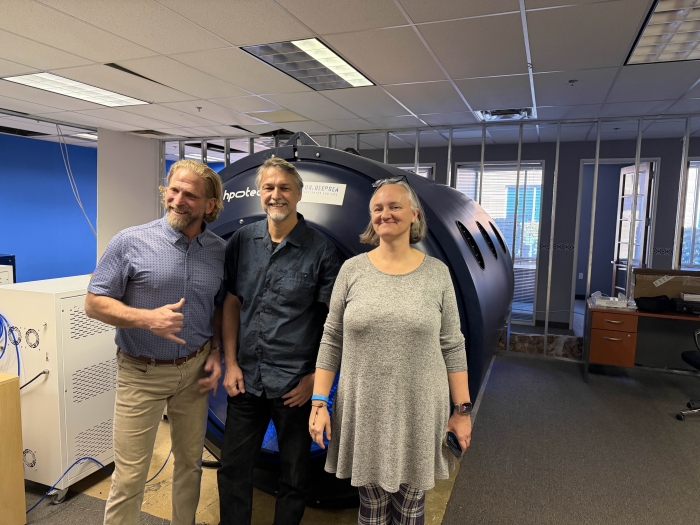
Joseph Dituri, Clinton Hughes and Judith Klein-Seetharaman stand in front of a large cylindrical chamber, built for ASU's XPRIZE Healthspan bid

(From left) Joseph Dituri, Clinton Hughes and Judith Klein-Seetharaman in front of the newly installed HPO.TECH Tampa multibaric chamber.

Jennifer Green/ASU

From Sponsored Partner Content

June 2, 2026 at 2:58 pm

Share this:

  • Share
  • Share via email (Opens in new window) Email
  • Share on Facebook (Opens in new window) Facebook
  • Share on Reddit (Opens in new window) Reddit
  • Share on X (Opens in new window) X
  • Print (Opens in new window) Print

By Tolga Kabak
Chief Technology Officer and co-founder, HPO.TECH

The Arizona State University Healthspan team is one of 100 semifinalists in the $101 million XPRIZE Healthspan competition, selected from 765 entries worldwide. The competition asks teams to develop interventions that restore muscle, cognitive and immune function by at least 10 years, with a stretch goal of 20. To advance, semifinalists must complete an eight-week clinical trial with 20 participants and meet relevant standards.

The team is led by Judith Klein-Seetharaman, a professor in ASU’s School of Molecular Sciences and the College of Health Solutions. Her protocol has four components. The first is a lifestyle and supplementation approach drawing on the laboratories of Susan Racette and the Klein-Seetharaman group, with biological targets of supplements modeled at scale on ASU’s high-performance computing infrastructure.

The second phase tests people’s responses to oxygen and atmospheric pressure.

The third is AI-driven adaptive resistance training developed by The Smart Fit Method. The fourth is digital-twin personalization built on metabolomic profiling, developed by Theriome, a startup founded by ASU alumnus Paniz Jasbi.

We at HPO.TECH built the hyperbaric chamber that supports the second component.
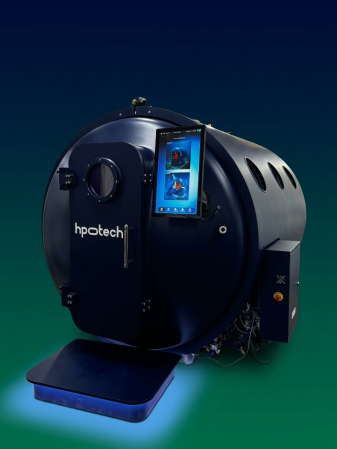
A custom multibaric system supports the oxygen protocol at the center of one of 100 semi-finalist entries in the $101M competition. Here’s what the team is testing, and why the equipment had to be built from scratch.

The chamber was designed in close consultation with Joseph Dituri, a retired Navy commander and undersea-medicine specialist who spent 100 days living in an underwater habitat off Key Largo, and who is now an associate professor at the University of South Florida and a core member of the ASU team. Dituri understands what the human body does under sustained pressure exposure better than most people alive. He had specific requirements: The chamber needed to simulate atmospheric conditions ranging from the summit of Mount Everest to depths well below sea level, and it needed to move between them with enough precision to support a research-grade protocol.

Participants spend roughly 15 minutes under simulated high-altitude conditions, then with one hour of hyperbaric oxygen. The cycle repeats daily across the trial.

The reason for that structure comes from two distinct lines of physiology. Brief hypoxia exposure elicits adaptive responses including erythropoietin production and activation of the HIF-1α pathway, both well-characterized in altitude medicine. Hyperbaric oxygen exposure has been studied in clinical settings for decades, and more recent work has examined possible effects on biomarkers associated with cellular aging. A 2020 study in the journal Aging by Hachmo and colleagues at Israel’s Shamir Medical Center reported telomere lengthening and reduced senescent cell counts in older adults after a 60-session hyperbaric oxygen protocol. Whether sequential hypoxia and hyperoxia exposure produces similar or compounded effects is exactly the kind of question the ASU protocol is designed to test.

For the engineering team at HPO.TECH, the project sits in a category we’ve been working toward for some time. Most hyperbaric chambers do one thing: deliver pressurized oxygen at a fixed range. The multibaric platform we built for ASU puts both pressure and oxygen concentration under programmable control, which means a researcher can design a protocol and the chamber will execute it the same way every session. That is what research-grade equipment actually means in this field, and it is rarer than the marketing around hyperbaric medicine often suggests.

The full trial will involve 200 participants with daily interventions across a year, and follow-up that runs into the early 2030s. The team is also pursuing Investigational new drug approval from the FDA before any new components are integrated into the final design.

We do not know yet whether the ASU protocol will deliver what the team is hoping for. That is the point of running the trial. What we do know is that the question deserves a serious answer, and that the equipment used to find that answer has to do exactly what the protocol asks of it, every session, for years.

That is the engineering problem we set out to solve. The rest is now in the hands of the scientists.


To learn more about HPO.TECH multibaric and hyperbaric systems for clinical and research applications, visit www.hpotech.com.

Questions or comments on this article? E-mail us at feedback@sciencenews.org | Reprints FAQ

Science News

Science News was founded in 1921 as an independent, nonprofit source of accurate information on the latest news of science, medicine and technology. Today, our mission remains the same: to empower people to evaluate the news and the world around them. It is published by the Society for Science, a nonprofit 501(c)(3) membership organization dedicated to public engagement in scientific research and education (EIN 53-0196483).

  • Science News Explores
  • Science News Learning

Subscriber Services

  • Subscribe
  • Renew
  • Give a Gift Subscription
  • Customer Service
  • Follow Science News on Facebook
  • Follow Science News on X
  • Follow Science News via RSS
  • Follow Science News on Instagram
  • Follow Science News on YouTube
  • Follow Science News on TikTok
  • Follow Science News on Reddit
  • Follow Science News on Threads

More Information

  • FAQ
  • Newsletters
  • Rights & Permissions
  • Advertise
  • Contact

Society for Science

  • About the Society
  • Society Store
  • Donate
  • Careers

© Society for Science & the Public 2000–2026. All rights reserved.

1776 Massachusetts Ave NW, Washington, DC 20036 202.785.2255
Terms of Service Privacy Policy

Log in

Subscribers, enter your e-mail address for full access to the Science News archives and digital editions.

Not a subscriber?
Become one now.