Animals
- Animals
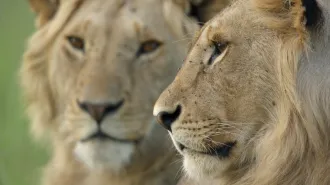
A new documentary shows what growing up lion is really like
The thrilling National Geographic series, premiering August 19, follows Kio from lion cub to king.
- Animals
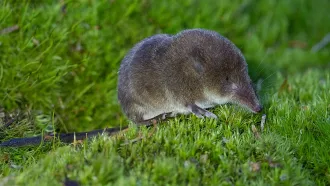
Shrews’ noses grow in winter as their brains shrink
Long-clawed shrews’ snouts temporarily grow larger in the winter. This skull reshaping may be an extreme survival strategy in cold conditions.
- Animals
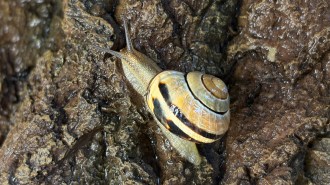
Snail slime does many jobs thanks to calcium
Snails have five distinct types of mucus, each with its own job. The mollusks tweak calcium secretions to get the chemical mixture just right.
- Animals
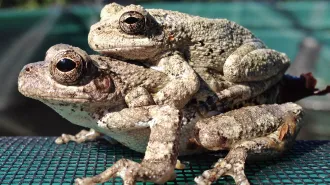
Too many choices complicate female frogs’ sex lives
In the lab, female frogs were less likely to choose preferred males as mating calls increased, potentially giving other males a better shot.
- Animals
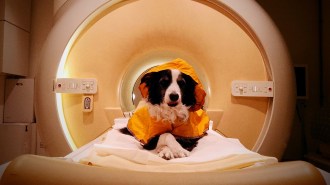
Sad or afraid? Dogs may be able to read your face
A new brain-imaging study suggests that dogs may be able to distinguish between certain negative human emotions just by looking at people’s faces.
- Health & Medicine
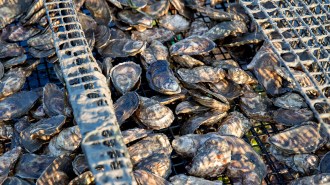
Bullfrogs may have an antidote to deadly shellfish poisoning
Researchers injected mice with a protein derived from frogs to save them from the same kind of shellfish poisoning that affects people.
- Animals
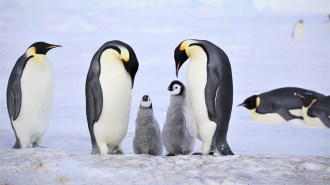
Emperor penguin chicks like these starved. An iceberg may be the cause
An emperor penguin colony in Antarctica saw a massive decline in chicks in 2025. The contours of a nearby grounded iceberg may have been the cause.
- Animals
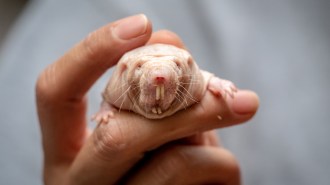
Naked mole-rat queens rule their colonies with a potent odor
A compound made only by breeding queens keeps naked mole-rat colonies infertile and free of conflict.
- Animals
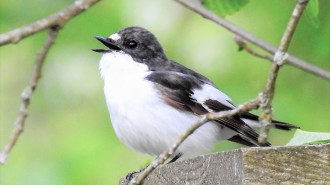
‘Cheating’ birds change their tune
Female pied flycatchers can tell whether a male is paired or not based on song differences. Mated males sing shorter songs and repeat syllables less.
- Animals
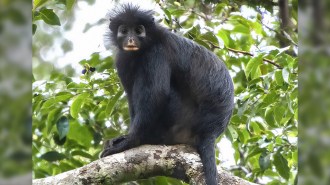
A new monkey species has been found deep in Congo’s forests
A canopy call, a partial photo and DNA revealed a new primate species — one that may already be at risk of extinction.
- Animals
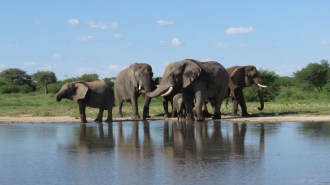
Elephants can relearn how to live wild after years in captivity
Researchers documented behavioral similarities between 11 rehabilitated elephants and their wild counterparts.
- Animals
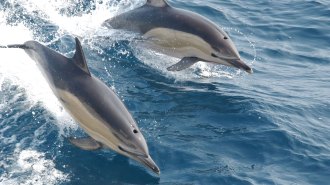
‘Forever chemicals’ could be aging dolphins beyond their years
Common dolphins in New Zealand are biologically older than their calendar ages. Trace metals and “forever chemicals” may be to blame.