Anthropology
- Humans
Ancient human visitors complicate the Falkland Islands wolf’s origin story
Scientists have debated how the Falkland Islands’ only land mammal journeyed to the region: by a long-ago land bridge or with people.
- Genetics
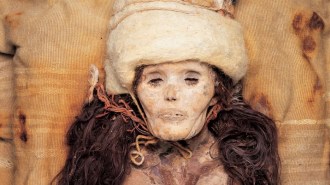
DNA from mysterious Asian mummies reveals their surprising ancestry
Ancient DNA indicates that an enigmatic Bronze Age group consisted of genetic, but not cultural, loners.
- Anthropology
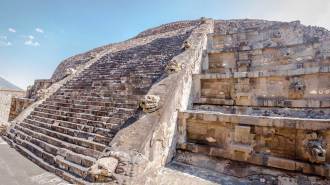
Lasers reveal construction inspired by ancient Mexican pyramids in Maya ruins
Archaeologists have uncovered structures in Guatemala that are remarkably similar to La Ciudadela and its temple at the ancient city of Teotihuacan.
- Archaeology
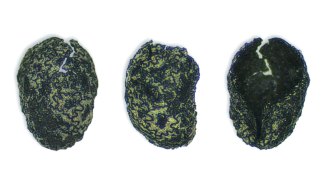
The earliest evidence of tobacco use dates to over 12,000 years ago
Burned seeds at an archaeological site in Utah hint at tobacco’s popularity long before it was domesticated.
- Anthropology
How catching birds bare-handed may hint at Neandertals’ hunting tactics
By pretending to be Neandertals, researchers show that the ancient hominids likely had the skills to easily hunt crowlike birds called choughs.
- Anthropology
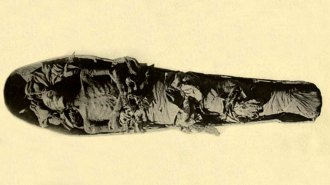
50 years ago, X-rays revealed what ancient Egyptians kept under wraps
In the 1970s, scientists used X-rays to unravel mummy secrets. Now, advances in technology are providing unprecedented views of ancient Egyptians.
- Anthropology
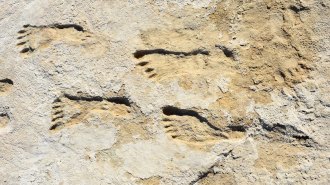
‘Ghost tracks’ suggest people came to the Americas earlier than once thought
Prehistoric people’s footprints show that humans were in North America during the height of the last ice age, researchers say.
- Humans
Fossils and ancient DNA paint a vibrant picture of human origins
Paleoanthropologists have sketched a rough timeline of how human evolution played out, centering the early action in Africa.
- Earth
This pictogram is one of the oldest known accounts of earthquakes in the Americas
The Telleriano-Remensis, a famous codex written by a pre-Hispanic civilization, describes 12 quakes that rocked the Americas from 1460 to 1542.
- Anthropology
Stone Age humans or their relatives occasionally trekked through a green Arabia
Hominids periodically inhabited ancient Arabia starting around 400,000 years ago when lakes temporarily formed as a result of monsoons, a study finds.
- Anthropology
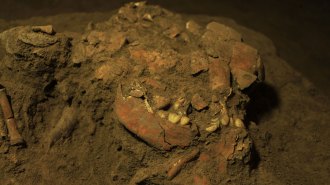
Ancient DNA shows the peopling of Southeast Asian islands was surprisingly complex
Ancient DNA from a hunter-gatherer skeleton points to earlier-than-expected human arrivals on Southeast Asian islands known as Wallacea.
- Archaeology
A 1,000-year-old grave may have held a powerful nonbinary person
A medieval grave in Finland, once thought to maybe hold a respected woman warrior, may belong to someone who didn’t have a strictly male or female identity.