Earth
We summarize the week's scientific breakthroughs every Thursday.
- Agriculture
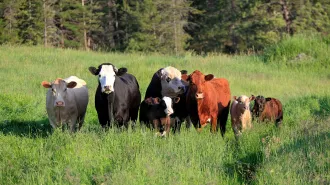
Scientists say Beefalo are all beef, no -alo. Breeders disagree
A whole-genome analysis of Beefalo, a hybrid bison-cattle breed, suggests very few individuals have any bison DNA at all, a new study reports.
- Plants
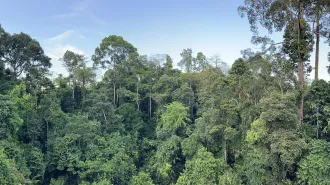
Giant trees have tricks to work around drought
Samples collected at daring heights provide evidence for an untested theory of tree drought adaptation, while countering another.
- Animals
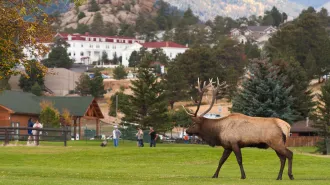
The animal behind most aggressive wildlife encounters may surprise you
Analysis of 3,000 incidents in Canada reveals which animal–human activity combos are especially risky. Of note: Elk and campgrounds are a bad mix.
- Microbes
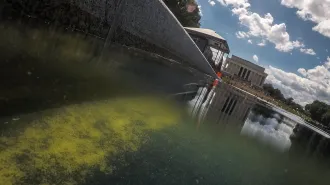
New science on algae die-offs is too late for the Reflecting Pool
Iron and hydrogen peroxide trigger cell death via ferroptosis, which cascades killer molecules through the population, causing mass die-offs of algae.
- Earth
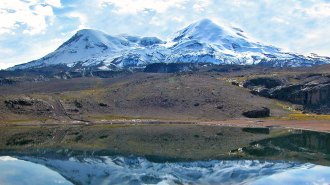
A tropical permafrost layer in Peru may be one of the world’s largest
Vast permafrost beneath the upper slopes of Peru’s tallest volcano could become a regional water source as glaciers in the Andes retreat.
- Earth
A 2011 earthquake bounced a seismic wave off Earth’s core, nudging Japan east
The wave's round trip to Earth's core set off a fault slip along Japan's plate boundaries, revealing a seismic hazard scientists hadn't recognized.
- Climate
A ‘Super El Niño’ may be on the way. What does that mean?
Past super El Niños have brought bad flooding, deadly fires and disease outbreaks. Climate experts already expect “shockingly high” temps this winter.
- Climate
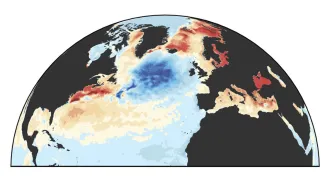
The North Atlantic’s ‘cold blob’ may signal a major current’s decline
A cold blob of water in the North Atlantic points to a weakening of the Atlantic Meridional Overturning Circulation, researchers report.
- Space
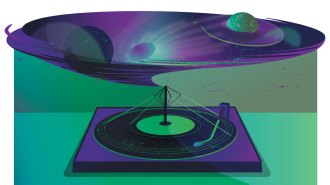
Otherworldly music albums feature space weather data
A science-art team uses research data to make music featuring sounds of Antarctica and outer space
- Earth
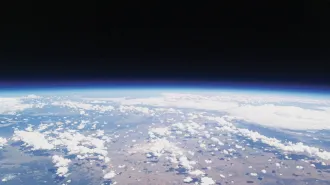
Earth’s stratosphere is a mysterious superhighway for microbes
Well-known microbes that grow on our crops, our gardens, even our skin have been found thriving at two to three times the flying height of a commercial jetliner.
- Animals
Honeybees and shrimp are now getting vaccinated
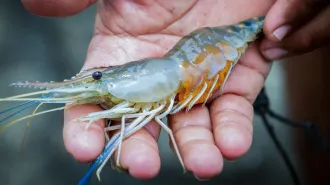
A shrimp vaccine for commercial use could protect the environment and prove vaccines aren’t just for vertebrates.
- Animals
This tiny, blue octopus is new to science
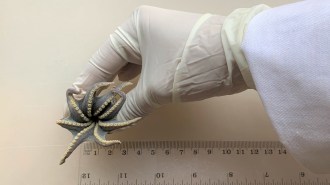
The deep-sea octopus is fully mature despite fitting in a palm, a trait researchers think may help it reproduce faster than larger relatives.