Physics
We summarize the week's scientific breakthroughs every Thursday.
- Physics
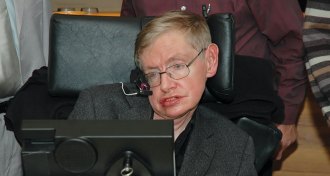
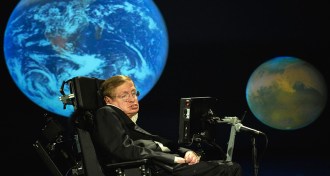
How physicists will remember Stephen Hawking
Researchers reflect on Stephen Hawking's contributions to the field and the cosmological puzzles he left behind.
- Materials Science
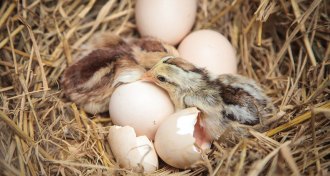
Eggshell nanostructure protects a chick and helps it hatch
The nanoscale structure of a chicken eggshell changes to fulfill different functions as the egg incubates.
- Materials Science
Live heart cells make this material shift color like a chameleon
A new material made of heart cells from rats and hydrogel changes color as the living cells contract and relax.
- Astronomy
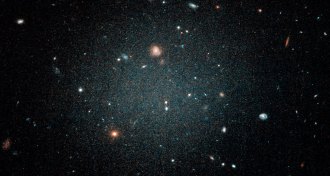
Dark matter is MIA in this strange galaxy
A galaxy without dark matter bolsters the case that the invisible substance really exists.
- Physics
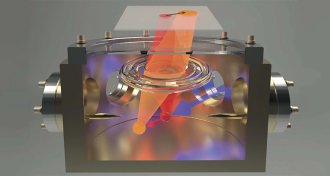
A single atom can gauge teensy electromagnetic forces
The force of scattering particles of light was measured in zeptonewtons, a billionth of a trillionth of a newton.
- Life
Earwigs take origami to extremes to fold their wings
Stretchy joints let earwig wings flip quickly between folded and unfurled.
- Physics
STEVE the aurora makes its debut in mauve
A newly discovered type of aurora is a visible version of usually invisible charged particles drifting in the upper atmosphere.
- Plants
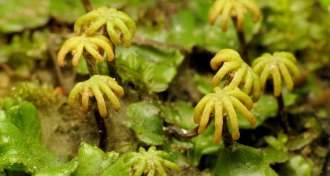
Liverwort reproductive organ inspires pipette design
A new pipette is inspired by a plant’s female reproductive structure.
- Cosmology
Renowned physicist Stephen Hawking dies at 76
Beyond his research contributions, Stephen Hawking popularized black holes and the deep questions of the cosmos.
- Quantum Physics
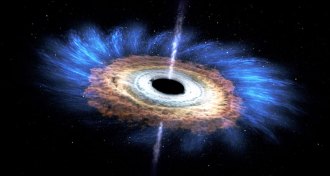
Superconductors may shed light on the black hole information paradox
Materials that conduct electricity without resistance might mimic black hole physics.
- Neuroscience
Readers muse about memory, magnetic monopoles and more
Readers had questions about the physical trace of memory, magnetic monopoles, blowflies and more.
- Physics
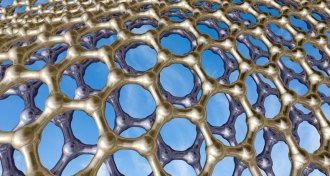
Give double-layer graphene a twist and it superconducts
When graphene layers are twisted to a “magic angle,” the material superconducts.