All Stories
-
- Animals
Sing a song of bird phylogeny
A new study challenges assumptions about birdsong, finding that the majority of songbird species have female singers.
- Health & Medicine
Imbalance in gut bacteria may play role in Crohn’s disease
Identifying the onset of Crohn’s disease may best be done by looking at bacteria in the cellular linings intestinal tissue.
- Health & Medicine
Experimental drug might get the salt out
Tests in people and rats show sodium levels in blood drop as drug candidate limits the body’s salt absorption.
- Paleontology
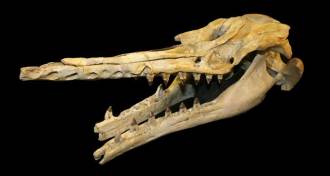
Fossil whale skull hints at echolocation’s origins
Ancestors of toothed whales used echolocation as early as 34 million years ago, analysis of a new fossil skull suggests.
- Science & Society
Medieval cosmology meets modern mathematics
Applying modern math to Robert Grosseteste’s theory of the heavenly spheres reveals a medieval idea’s similarity to modern cosmology.
-
- Neuroscience
Pianists learn better by playing
Pianists’ muscle memory helped them recognize incorrect notes.
- Science & Society
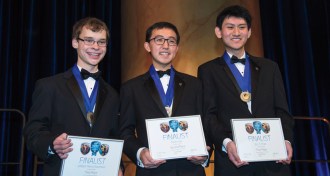
Flu drug research takes Intel STS top honors
A teenager’s computer analyses that identified six potential new flu-fighting compounds claimed first place at the 2014 Intel Science Talent Search.
- Animals
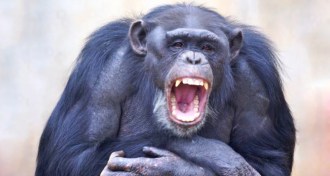
Chimps catch people’s yawns in sign of flexible empathy
Chimpanzees may show humanlike empathy, as evidenced by their contagious yawning.
- Neuroscience
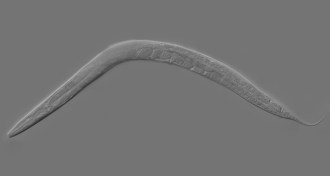
Brain chemicals help worms live long and prosper
Serotonin and dopamine accompany long lives in C. elegans worms under caloric restriction.
- Tech
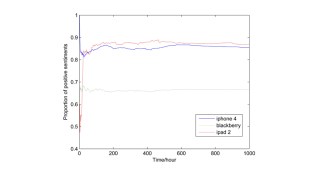
Early advantages pay off in public opinion on Twitter
Twitter data show that having a slight advantage early in the formation of public opinion can be beneficial even though the state of the opinions level off over time.