All Stories
- Science & Society
Slight boost for U.S. climate research funding
While most science funding remains flat lined in President Obama’s 2015 budget, climate change research gets an increase.
- Science & Society
Top 10 scientists of the 13th century
Modern science began to emerge in Western Europe centuries before the Scientific Revolution, thanks to a few scholars who were ahead of their time.
- Materials Science
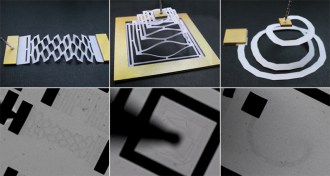
World’s thinnest material stretches, bends, twists
Graphene, the thinnest known material at one carbon atom thick, can be manipulated under the microscope using tricks from a variety of paper-cutting origami called kirigami.
- Astronomy
Mature galaxies found in young universe
Inactive galaxies the size of the Milky Way found dating to when the universe was just 1.5 billion years old.
- Life
The Monkey’s Voyage
By 26 million years ago, the ancestors of today’s New World monkeys had arrived in South America. How those primates reached the continent is something of a conundrum.
- Animals
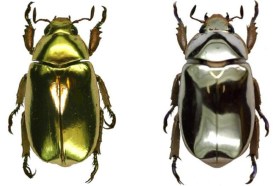
There’s plenty of bling in the natural world
Beetles that look like solid gold are just the start to jewel-like and metallic looks in nature.
- Astronomy
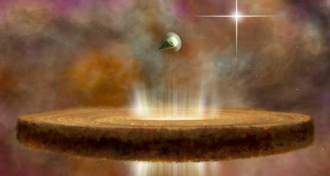
Behemoth star destroys potential solar systems
A massive star in the Orion Nebula is evaporating disks surrounding young stars in its neighborhood but some disks mysteriously manage to survive.
- Psychology
Attractiveness studies are hot, or not
Studies that link attractiveness to other traits are often misinterpreted, including recent studies of nose bacteria and of cycling ability.
- Life
Protein linked to motor nerve cells being fast or slow
The protein, Delta-like homolog 1, is made in 30 percent of motor neurons and helps to determine at which speed the cells work, research shows.
- Animals
Amphibian diseases flow through animal trade
Discovery of chytrid fungus and ranaviruses in frogs and toads exported from Hong Kong shows how pathogens may spread.
- Archaeology
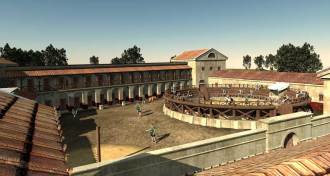
Roman gladiator school digitally rebuilt
Imaging techniques unveil a 1,900-year-old Roman gladiators’ training center that’s buried beneath a site in Austria.
- Chemistry
Milk protein a potential flame retardant
Protein found in milk offers a nontoxic way to extinguish fabric fires.