All Stories
- Animals
‘Furry Logic’ showcases how animals exploit physics
"Furry Logic" explores how animals rely on the laws of physics in pursuit of food, sex and survival.
- Animals
Unusually loose skin helps hagfish survive shark attacks
Hagfish skin that easily slips and slides can be a lifesaver in crises such as shark attacks.
- Chemistry
Debate heats up over claims that hot water sometimes freezes faster than cold
A team of chemists has a new explanation for the Mpemba effect, while other scientists debate if it is even real.
- Astronomy
Some pulsars lose their steady beat
Two pulsars spend most of their time switched off, hinting at a large population of part-time pulsars hiding in the Milky Way.
- Plants
Meat-eating pitcher plants raise deathtraps to an art
The carnivorous California pitcher plant ensnares its dinner using a medley of techniques.
- Neuroscience
Facial-processing area of brain keeps growing throughout childhood
Contrary to scientists’ expectations, a facial-processing area of the brain grows new tissue during childhood, an MRI study suggests.
- Paleontology
Tomatillo fossil is oldest nightshade plant
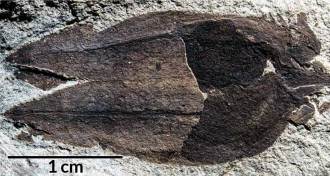
Two 52-million-year-old tomatillo fossils in Patagonia push the origin of nightshade plants back millions of years, to the time when dinosaurs roamed.
- Archaeology
Hunter-gatherers were possibly first to call Tibetan Plateau home
Hunter-gatherers may have been Asia’s first year-round, high-altitude settlers.
- Astronomy
Saturn’s 10th moon was the first satellite discovered in the modern space age
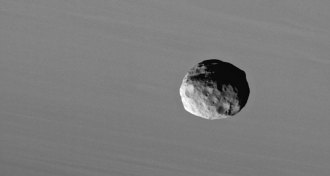
Fifty years ago, astronomers knew of 10 moons orbiting Saturn. Since then they’ve catalogued a diverse set of 62 satellites, with the help of the Cassini spacecraft.
- Climate
Warming could disrupt Atlantic Ocean current
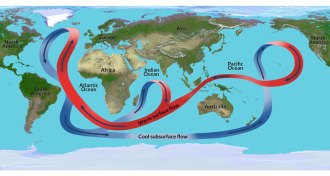
The Atlantic current that keeps northwestern Europe warm may be less stable under future climate change than previously thought, revised simulations show.
- Astronomy
Gotcha: Fast radio burst’s home nabbed
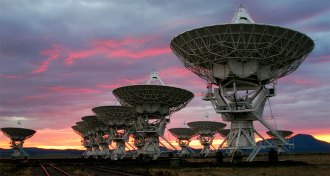
For the first time, astronomers pinpoint a precise position on the sky for a fast radio burst, revealing that the outburst originated in a galaxy about 2.5 billion light-years away.
- Chemistry
Carbon can exceed four-bond limit
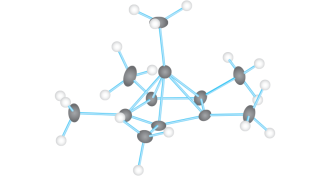
Scientists confirm structure of unusual molecule in which carbon bonds to six other carbon atoms.