Notebook
-
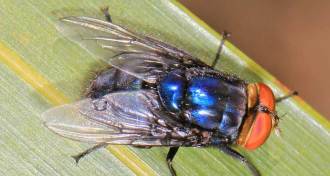
Agriculture50 years ago, screwworm flies inspired a new approach to insect control
The United States has wiped out screwworm flies repeatedly since 1966 using the sterile male eradication technique.
By Kyle Plantz -
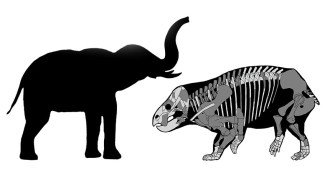
PaleontologyThis huge plant eater thrived in the age of dinosaurs — but wasn’t one of them
A newly named plant-eater from the Late Triassic was surprisingly hefty.
-

AnimalsWombats are the only animals whose poop is a cube. Here’s how they do it.
The elasticity of wombats’ intestines helps the creatures shape their distinctive poops.
-
AstronomyOne of Earth’s shimmering dust clouds has been spotted at last
Almost 60 years after a Polish astronomer spotted clouds of dust orbiting Earth near the moon, astronomers have detected those clouds again.
-
EnvironmentCar tires and brake pads produce harmful microplastics
Scientists surveyed tiny airborne plastics near German highways and found that bits of tires, brake pads and asphalt make up most of the particles.
-
EarthThese tiny, crackly bubbles are a new type of volcanic ash
Scientists have identified a new type of volcanic ash made up of millimeter-long spheres with a crackled surface.
-
Animals50 years ago, atomic testing created otter refugees
Nuclear testing on the island of Amchitka caused hundreds of otters to be rehomed 50 years ago. Those hundreds have grown into thousands.
-
EcosystemsHow researchers flinging salmon inadvertently spurred tree growth
Scientists studying salmon in Alaska flung dead fish into the forest. After 20 years, the nutrients from those carcasses sped up tree growth.
-
AnimalsWhile eating, these tiny worms release chemicals to lure their next meal
As they eat insects, one nematode species releases chemicals that attract more insect prey.
By Yao-Hua Law -
Health & MedicineAn eye disorder may have given Leonardo da Vinci an artistic edge
An analysis of portraits believed to portray Leonardo da Vinci offers evidence that the artist had exotropia, in which one eye turns outward.
-
Health & Medicine50 years ago, the safety of artificial sweeteners was fiercely debated
Scientists are still learning more about the health effects of chemical sweeteners
-
AnimalsHow nectar bats fly nowhere
Exquisitely sensitive tech makes first direct measurements of the forces of bat wingbeats.
By Susan Milius