Static electricity is a mystery, and scientists are all charged up
Despite being studied for centuries, the phenomenon remains a sticky subject

Illustration by Simone Noronha
This is a human-written story voiced by AI. Got feedback? Take our survey . (See our AI policy here .)
Galien Grosjean was a caretaker of tiny glass beads. He bathed them, gently cradled them with tweezers, placed them delicately in his experimental apparatus. He avoided unneeded jostling at all costs: Subtle mishandling could alter the beads’ properties in unknown ways. And, even worse, losing just one could cost him a week’s worth of work. “I tend to be quite clumsy, so I have to fight against my tendencies,” says Grosjean, a physicist then at the Institute of Science and Technology Austria in Klosterneuburg.
In his experiment, he floated a bead, levitating it with acoustic forces from ultrasound waves to avoid directly touching it. Then, he switched off the ultrasound, instantaneously dropping the grain and letting it collide — ping! — with a plate below. As it bounced upward, the ultrasound captured it milliseconds later in a hands-free game of catch.
Grosjean studies static electricity. His obsessive finesse might seem like overkill for the phenomenon behind mundane effects like hair-raising balloons and clingy clothing. But the basics of static electricity are frustratingly elusive: Even though scientists have been studying it for centuries, they still don’t know exactly what is happening when one object transfers its electric charge to another. In most situations, “we really have no clue what the mechanism is,” says Grosjean, now at Universitat Autònoma de Barcelona.
Static electricity shapes our world on scales large and small. It’s thought to explain how planets, including Earth, formed out of colliding bits of dust. It generates lightning, strengthens dust storms and helps pollen cling to pollinators. It can ignite industrial fires, gum up pharmaceutical manufacturing, fry delicate electronic circuitry and hamper scientific experiments and space exploration.
But an understanding of the basics is still missing, says chemist Bilge Baytekin of Bilkent University in Ankara, Turkey. “You feel like a child even after working for many, many years.”
Baytekin and Grosjean hope that will soon change. They are among a small, somewhat quirky cadre of scientists who are pooling their knowledge to solve the mysterious puzzle of static electricity. It is as if every scientist holds a different piece of that puzzle. “Physicists have their own understanding of static electricity; chemists have also our understanding of static electricity; engineers look from a different perspective,” Baytekin says.
In an effort to put the puzzle pieces together, that crew converged in June on Cocoa Beach, Fla., at a meeting of the Electrostatics Society of America. There, new techniques, such as Grosjean’s acoustic levitation, revitalized interest in the sticky fundamentals of static electricity. Researchers are beginning to pin down hard facts and draw connections, says materials scientist Laurence Marks of Northwestern University in Evanston, Ill.
“We’re actually making amazing progress…. People are starting to see, hey, this could be done; we can work this one out.”
Stuck on static
For all the questions about static electricity, scientists agree on some basics. Whenever two objects touch or rub, they exchange charge. That process, called triboelectricity, results in static electricity. The subatomic players behind this process are electrons, which are negatively charged, and protons, which are positively charged. Objects with equal numbers of electrons and protons have no net charge. But as soon as objects touch, the balance of charges shifts, often in surprisingly complex ways.
If you’ve ever rubbed a balloon against your hair, for example, you might notice it dancing on end. That’s because rubbing gives the balloon a negative charge and your hair a positive charge. Like charges repel one another, so the strands of your hair push away from each other in messy confusion. And your hair clings to the balloon because opposite charges attract. But if too much charge builds up — watch out. You may be in for a painful electric shock when you touch another object, as the excess is discharged.
Experiments show that certain materials, like the latex of the balloon, have a tendency to charge negatively and others, like hair, tend to charge positively. Scientists have devised a ranking called the triboelectric series, which predicts which object will become negative in a given pair.

But dig deeper into these examples and things quickly get murky.
When charge is exchanged, for example, it’s not clear what exactly is being transferred. Individual electrons might be migrating from one object to the other. Or the jump might be made by ions — charged atoms or molecules — or by even by larger chunks of charged material. Any of these mechanisms would produce an imbalance of charge, with extra or missing electrons compared with protons.
And the triboelectric series isn’t perfect — different experiments yield somewhat different orderings of materials. Even more worrying, there’s no deeper understanding behind the hierarchy: No one knows what properties of a material make it more likely to charge negatively or positively. And the series also doesn’t explain why identical objects can charge when touched.
Part of the issue is that static electricity is in some ways a subtle effect. Shrink yourself down to atomic size and stroll along the surface of a charged material, and you’d stumble across an extra (or missing) electron every 100,000 atoms or so. To study static electricity at that level, “you have to trace something which is a very tiny minority of everything which is happening,” says physicist Rolf Möller of the University of Duisburg-Essen in Germany. “And this is what makes it so difficult.”
Static significance
The study of static electricity is almost as old as science itself. Around 360 B.C. the philosopher Plato wrote about the “marvels” of amber, which attracts other objects when rubbed. In fact, the word electricity comes from the Greek word for amber, ēlektron.
Scientific fascination with the subject continued on and off for centuries. Benjamin Franklin’s studies of electricity, for example, used generators based on static electricity, such as a spinning glass globe rubbing against a leather pad. He famously flew a key-laden kite in a storm, demonstrating that lightning was an electrical phenomenon like the static electricity he observed in his lab.
“It’s so poetic that it’s so old … and that we still can’t make sense of it,” says physicist Scott Waitukaitis, who leads the Austria-based group where Grosjean did his experiment on tiny beads.
Many scientists today consider static electricity a nuisance to be eliminated rather than a phenomenon worthy of study in itself. “Charges are a pain and they just want to get rid of [them],” Grosjean says. Static electricity can spark fires, destroy sensitive equipment and muck up experiments — in science and industry alike.
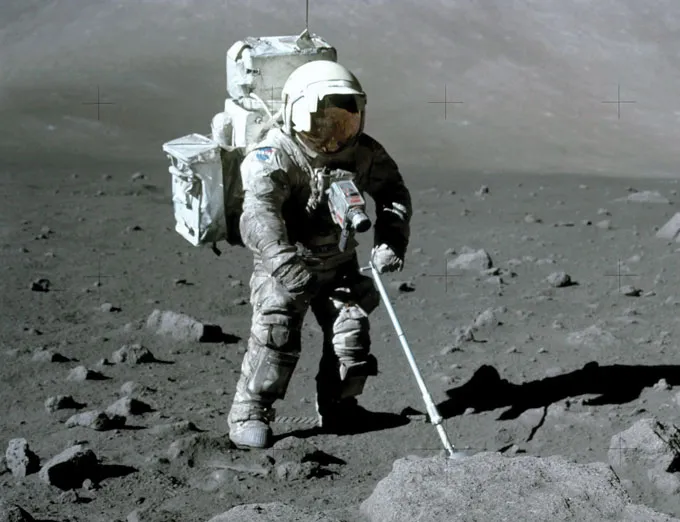
And its influence extends into outer space. Headaches caused by static electricity multiply in space, where there’s no humidity to dissipate charge and weak gravity means electric forces are more prominent.
“Forces that are not important on Earth start to become important,” says planetary scientist Christine Hartzell of the University of Maryland in College Park. A lunar rover’s wheels or solar panels could quickly get coated in sticky, charged dust that hampers performance. An astronaut, charged up from shuffling across the soil, could unwittingly zap sensitive equipment or track hazardous moon dust inside a spacecraft. That means static electricity is top of mind for NASA’s future Artemis missions to the moon.
A better understanding of the phenomenon could help scientists predict exactly how different materials might charge under given conditions — and perhaps, how to control that charging. “We want to understand the fundamentals, but we also want to help the people in the industry and the people who are actually suffering from these effects,” says Baytekin.
Common ground
Scientists do agree on what’s happening in one case: metal touching metal. Different types of metals vary in how tightly they hang onto their electrons and therefore how difficult it is for electrons to escape from their surfaces.
The amount of energy needed to remove an electron is known as a work function and it influences how electrons move where metals meet. Every time two different metals touch, electrons move to the one with the higher work function, giving it a negative charge.
Scientists hope to one day broaden their understanding beyond metals. “The ultimate goal would be to have some kind of unifying theory that worked across different materials,” Hartzell says. “That would be awesome.”
It might help to break the problem down, Marks and a colleague suggested in a 2025 paper in Reports on Progress in Physics. First, static electricity must have a “mechanism,” which describes what is actually transferred when charge moves — whether it be electrons, ions or larger bits of material. Second, it must have a “driver,” something that causes the charge to move. For example, when metals meet, the driver is the difference in work function between the two materials. Finally, there are various external factors that can influence charging, such as humidity or the roughness of the surfaces involved.
If all the drivers and mechanisms could be worked out for all materials, then it might be possible to create a unified theory. But it could take a decade to get there, Marks says.
And not everyone agrees we’ll get there. Static electric charging may ultimately be too complex to precisely predict in everyday situations, says chemical engineer Daniel Lacks of Case Western Reserve University in Cleveland. “I don’t think the final answer is going to be an easy, simple answer. I think the final answer will be that it’s very dependent on many, many factors.”
The power of schmutz
Meanwhile, scientists are pushing ahead with new experiments using increasingly sophisticated techniques.
Acoustic levitation, for example, prevents unintended charging that can be caused simply by handling objects. Using that technique, Grosjean, Waitukaitis and colleagues zeroed in on one specific question: Why do two identical materials charge when they touch? The team set out to measure how glass beads charged when they hit a plate made of the same material.
What they found was unexpected. Each individual bead had consistent charging, and there was dramatic variation between beads. One bead, for example, would always get a negative charge when it hit the plate, and another would always get a positive charge. Something must make each bead behave differently — but what?
Notably, the results changed when researchers cleaned the beads by heating them to 200° Celsius and letting them cool. A grain that had been cleaned almost always charged negatively when it hit an uncleaned plate, Waitukaitis and colleagues reported in March in Nature.
Close inspection revealed that the cleaning process stripped away carbon compounds that are prevalent in Earth’s atmosphere, and which are stuck, invisibly, to the surface of most objects. What to call this stuff? “At first, we were going to call it junk, and then we thought, maybe schmutz,” Waitukaitis said at the meeting. Whatever you call the stuff, it’s pervasive and unavoidable.
The experiment didn’t show how charge moves, but it revealed that what’s on the surface matters. And that idea is starting to catch on. At the meeting, physicist Hermann Nienhaus of the University of Duisburg-Essen showed that just a single layer of atoms on top of silicon could alter its charging behavior when it meets metal. “This gives you an idea how careful you have to be to make a reproducible experiment,” says Möller, who collaborated with Nienhaus.
Even the simple metal-on-metal case turns out to be more complicated than previously thought. The charging of a gold sphere, dropped on a copper plate, also depends on the speed at which the sphere hits, Möller, Nienhaus and colleagues reported in 2021 in Science Advances. That’s because the sphere and the plate squish a little bit when they collide. There’s more squishing at higher speeds, which increases the contact area and the charge transferred.
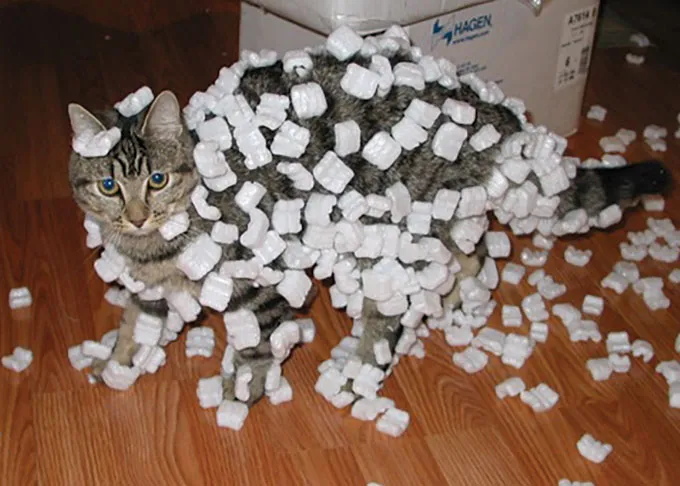
Static electricity only gets more complicated with polymers, substances made up of very large molecules, including plastics and rubber. These are also the materials behind the worst indignity ever to befall a cat that ventured into a cardboard box: fur festooned with packing peanuts.
With polymers, even an object’s past can matter. For example, history influences experiments in which many different squares of a squishy polymer were touched together. The number of times a particular square had been previously touched determined how it charged, Waitukaitis and colleagues reported in 2025 in Nature.
These experiments are adding to the tally of external factors known to affect charging — a long list that includes humidity, temperature, surface curvature, roughness, object size, and whether two objects touch, rub or roll across one another.
Complexities like these may have contributed to past confusion. Previously, seemingly similar experiments have been contradictory, giving the field “a very bad reputation,” Marks says. But recent work shows that, when conditions are tightly controlled and relevant factors are identified, results can be reproducible.
The appeal of that challenge has cultivated a core group of scientists who are passionate about solving the mysteries of static electricity.
Lift-off
That passion runs deep enough that, early on the morning of the meeting’s fourth day, many participants rose before dawn. They walked to the beach, sand shuffling under their feet in the dark — presumably causing untold electric charging. They peered northward, where a rocket was set to launch about 25 kilometers away. In a nod to static electricity’s importance for spaceflight, the meeting was held on Florida’s “Space Coast,” where rocket launches are frequent. Soon, a bright light flared and a hush enveloped the crowd.
It was an eclectic group standing on that dark beach, lit by the rocket’s glow. Conference attendees comprised a mixture of specialists: NASA engineers, experts in industrial explosions, spacesuit designers, researchers working with nuclear weapons labs and more.
And it was a collegial bunch — a change of pace from the sometimes cutthroat atmosphere of scientific conferences. Talks included playful discussions of the charging of water in luxury showerheads, parasitic roundworms that use static electricity to leap to their hosts, and even, amusingly, the glow emitted by a pickle when hooked up to electricity.
“We’re friendly — maybe to the point of a fault,” Waitukaitis says. Chemists and physicists, he adds, struggle to communicate, and they don’t always interrogate their differences of opinion. “When I don’t understand the chemist, or I question what they’re doing, maybe it would actually benefit from a little bit more aggressively trying to understand.”
A meeting of vigorous public debate, this was not. Take, for example, discussions about flexoelectricity, a phenomenon that’s been proposed as a driver of electric charge transfer. The idea is that, as a material distorts when it is pressed into another, the rearranging of charges on small scales creates electric fields that can cause charge to transfer between the materials. At the meeting, Möller reported evidence of flexoelectricity in metal hitting a metal oxide. But the effect was transient — it was not driving charge transfer, and hence not behind static electricity, he said.
One might expect proponents to have spoken up in flexoelectricity’s favor, but no such debate arose, perhaps because the results were specific to Möller’s experiment. “We don’t see any effect of the flexoelectricity on the outcome,” Möller says. “I will not [say] that this is the same for other experiments.”
It’s easy to sweep conflict under the rug in a field where so many factors affect results. If experiments disagree, it may be due to a true scientific discrepancy, or it may be that one group was working with metals and another with polymers. That has made coming to consensus extra challenging.
Paddling toward understanding
On the last night of the meeting, dozens of triboelectricity enthusiasts navigated rented kayaks through the nearby Banana River lagoon. With each paddle stroke, a blue glow streaked through the water. The outing, arranged by the meeting’s organizers, gave attendees a glimpse of Florida’s bioluminescent waters.
Hands dipped into the bathwater-warm waters of the lagoon, participants marveled as glittering blue slipped off their fingers. The effect was biological — no static electricity involved — but just as awe-worthy.
The kayaks were tandem, with two people in each boat. Chemists paddled with physicists, senior researchers with students, all pulling in the same direction. They worked together in a way that seemed more easily achievable in watersports than in the study of tribocharging. But at least one point of consensus has been achieved, Möller says. “People are accepting that the problem is more complex than they thought.”
It seems appropriate that static electricity is a scientifically sticky subject. But there remain opportunities to become unstuck. That will likely demand not some genius insight, but slow, methodical work — not unlike the focus needed to slot puzzle pieces into place, one by one. “It’s really a case of synthesis,” says Marks. “We know all the pieces of the jigsaw puzzle, we’ve just got to put them together in the right order.”