1.56-billion-year-old fossils add drama to Earth’s ‘boring billion’

China find could shift timing of eukaryotes’ becoming multicellular

mudstone fossil microbes

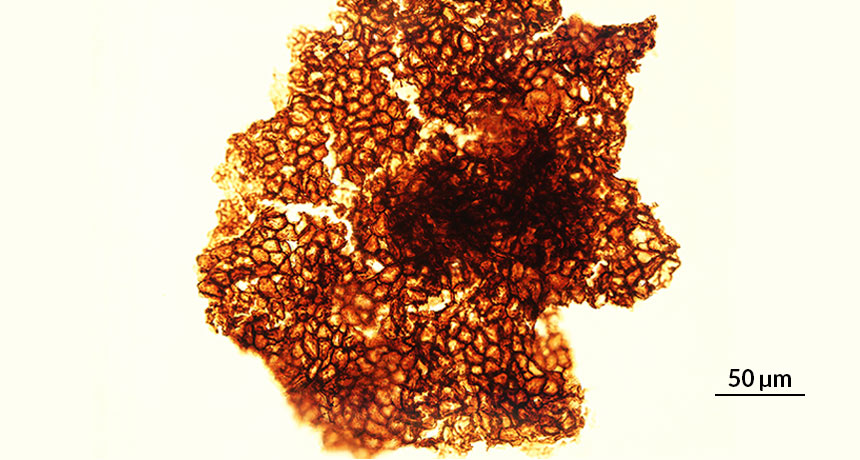
LIVING LARGE  Fossils from 1.56-billion-year-old mudstone contain clusters of cells (shown) that resemble large-scale multicellular eukaryotes.

M. Zhu
A form of multicellular life visible to the naked eye may have emerged nearly a billion years earlier than scientists once thought.

At 1.56 billion years old, fossils discovered in north China represent the best evidence yet for the early existence of large eukaryotes, paleobiologist Maoyan Zhu of the Chinese Academy of Sciences in Nanjing and colleagues report May 17 in Nature Communications.