Uncategorized
- Oceans
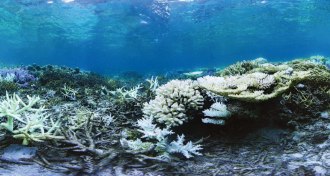
Reef rehab could help threatened corals make a comeback
Reefs are under threat from rising ocean temperatures. Directed spawning, microfragmenting and selective breeding may help.
- Climate
Extreme lightning events set records
A lightning flash stretching 321 kilometers across and one that lasted 7.74 seconds have been named the most extreme events on record, thanks to a new rule change.
- Life
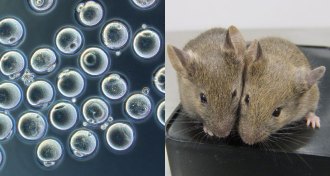
In a first, mouse eggs grown from skin cells
Stem cells grown in ovary-mimicking conditions in a lab dish can make healthy mouse offspring, but technique still needs work.
- Neuroscience
Out-of-sync body clock causes more woes than sleepiness
The ailment, called circadian-time sickness, can be described with Bayesian math, scientists propose.
- Ecosystems
‘Citizen Scientist’ exalts ordinary heroes in conservation science
Journalist Mary Ellen Hannibal’s “Citizen Scientist” tells tales of ordinary people contributing to science.
- Animals
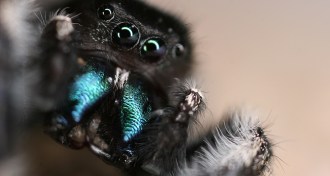
Be careful what you say around jumping spiders
Sensitive leg hairs may let jumping spiders hear sounds through the air at much greater distances than researchers imagined.
- Life
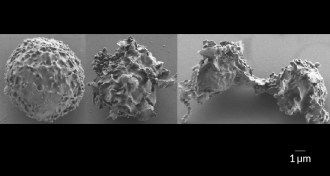
Placenta protectors no match for toxic Strep B pigment
Strep B uses a toxic pigment made of fat to kill immune system cells, spurring preterm labor and dangerous infections, a monkey study shows.
- Computing
AI system learns like a human, stores info like a computer
A new artificial neural network hooked up to extra memory can learn to solve complex problems.
- Astronomy
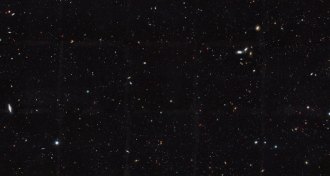
Cosmic census of galaxies updated to 2 trillion
A new census of the cosmos suggests that there might be 2 trillion galaxies in the observable universe, about 10 times as many as previous estimates.
- Psychology
Erasing stigma needed in mental health care
Social forces drive those in need away from mental health care.
- Life
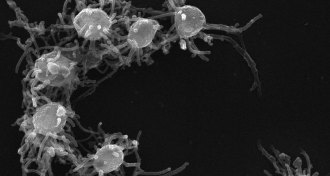
One-celled life possessed tools for going multicellular
Unicellular ancestors of animals had molecular tools used by multicellular life.
- Animals
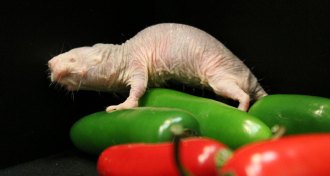
Hot and spicy pain signals get blocked in naked mole-rats
Naked mole-rats have a protein that interrupts pain signal.