Uncategorized
-
Underwater Eden: Saving the Last Coral Wilderness on Earth by Gregory S. Stone and David Obura
Amazing photos make visible the reasons behind efforts to save a biological wonder: the coral reefs of the South Pacific’s Phoenix Islands. Univ. of Chicago, 2013, 170 p., $40
By Science News -
The White Planet: The Evolution and Future of Our Frozen World by Jean Jouzel, Claude Lorius and Dominique Raynaud
A team of scientists tells the story of ice on Earth, from ice ages to the latest discoveries from ice cores. Princeton Univ., 2013, 306 p., $29.95
By Science News -
Science on American Television: A History by Marcel Chotkowski LaFollette
This history of science programs illustrates the shifting line between education and entertainment. Univ. of Chicago, 2013, 306 p., $45
By Science News -
-
LifeMice get brain boost from transplanted human tissue
An experimental transplant of what have long been considered just support cells shows they may play a role in memory and learning.
-
HumansOf Mice and Man
The lab mouse is being remodeled to better mimic how humans respond to disease.
By Susan Gaidos -
-
MathReal-life Maxwell’s demon adds fuel to debate about status of the second law
Fight Club had its First Rule (don’t talk about Fight Club). The Transporter enforces Rule Number 1 (never change the deal). And NCIS Special Agent Leroy Jethro Gibbs observes Rule 1 (never mix the suspects together in the same room). Physics has the second law of thermodynamics. It’s weird when you think about it. Movies […]
-
SpaceNo vacancy around stars
The Milky Way’s planets pack tightly around their stars, according to simulations using data from the Kepler space telescope.
By Andrew Grant -
ChemistryMissing link in taste chain identified
Taste-cell protein sends message to brain that tongue has detected sweet, bitter or umami flavor.
-
PhysicsVortex gets tied in knots
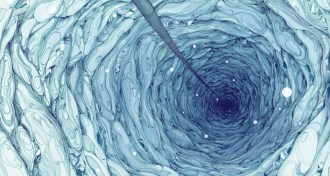
Physicists use 3-D printing and tiny bubbles to capture twisted-up water.
By Andrew Grant -
Health & MedicineImmune cells chow down on living brain
Microglia prune developing rat and monkey brains by eating neural stem cells.
By Meghan Rosen