
All Stories by Meghan Rosen
- Planetary Science
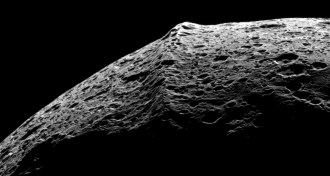
Mountains on Saturn moon may have come from space
A mountainous ridge around the equator of Iapetus, one of Saturn’s moons, may have formed from cosmic debris.
- Climate
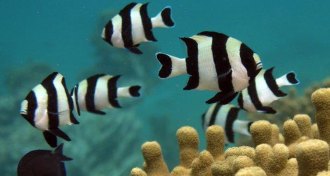
Reef fish act drunk in carbon dioxide–rich ocean waters
In first test in the wild, fish near reefs that bubble with CO2 lose fear of predators’ scent.
- Computing
App could cut jet lag short
A new app calculates lighting schedules to help travelers adjust quickly to new time zones.
-
- Genetics
Neandertal legacy written in Europeans’ fat metabolism
DNA inherited from Neandertal interbreeding may have helped people adjust to Europe’s environment.
- Psychology
Twenty-two emotions are written on our faces
People’s faces express at least 22 feelings – far more than the six emotions scientists previously recognized.
- Humans
Former baseball players have big, strong bones in old age
Decades later, health benefits of exercise persist in male athletes’ bones.
- Plants
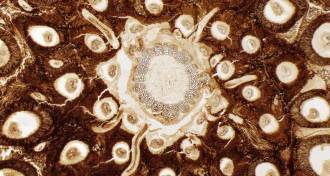
Fossil fern showcases ancient chromosomes
Fossil nuclei and chromosomes seen in a 180-million-year-old fern reveals that the plants have stayed mostly the same.
- Life
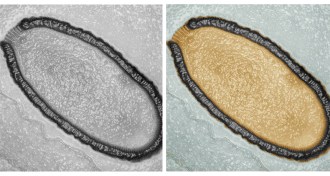
Giant zombie virus pulled from permafrost
After lying dormant in Siberian permafrost for 30,000 years, the largest virus ever discovered is just as deadly as it was when mammoths roamed the Earth.
- Neuroscience
Me, Myself, and Why
Me, Myself, and Why is an ambitious effort to dissect the hodgepodge of genetic and environmental factors that sculpt people’s identities.
- Psychology
Suicide rates drop in big cities
With more social connections, people may be less inclined to take their own lives.
- Health & Medicine
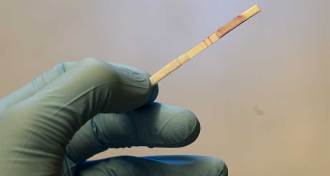
Urine test detects not pregnancy but cancer
A paper strip uses nanoparticles to pick up evidence of tumors or blood clots in mice.