1,668 results
1,668 results for: Ants
- Animals
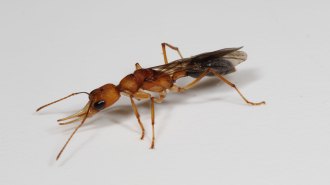
Invasive yellow crazy ants create male ‘chimeras’ to reproduce
Yellow crazy ants are first known species where chimerism is required in males: Each of their cells holds DNA from just one of two genetic lineages.
- Life
Fungi don’t turn humans into zombies. But The Last of Us gets some science right
Fungi like those in the post-apocalyptic TV show are real. But humans’ body temperature and brain chemistry may protect us from zombifying fungi.
- Tech
This robot automatically tucks its limbs to squeeze through spaces
Inspired by ants, a robot with telescoping legs can crawl under low ceilings, climb over steps and move on grass, loose rock and mulch.
- Animals
The fastest claw in the sea belongs to young snapping shrimp
When juveniles snap their claws shut to create imploding bubbles, they create the fastest accelerating underwater movements of any reusable body part.
- Science & Society
Here are 7 new science museums and exhibitions to visit in 2023
The Grand Egyptian Museum is slated to open, as well as new exhibitions dedicated to space travel, the Galápagos Islands and more.
- Animals
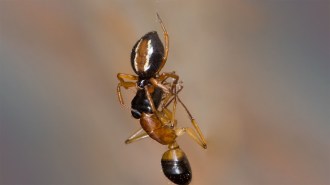
This spider literally flips for its food
The Australian ant-slayer spider’s acrobatics let it feast on insects twice its size, a new study shows,
- Animals
A clever molecular trick extends the lives of these ant queens
Ant queens typically live much longer than their workers by blocking a key part of a molecular pathway implicated in aging, a new study suggests.
- Plants
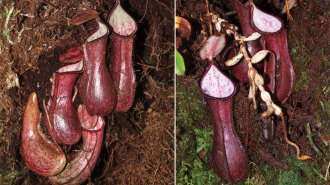
This pitcher plant species sets its deathtraps underground
Scientists didn’t expect the carnivorous, eggplant-shaped pitchers to be sturdy enough to survive below the surface.
- Neuroscience
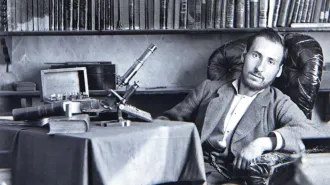
How a scientist-artist transformed our view of the brain
The book ‘The Brain in Search of Itself’ chronicles the life of Santiago Ramón y Cajal, who discovered that the brain is made up of discrete cells.
- Animals
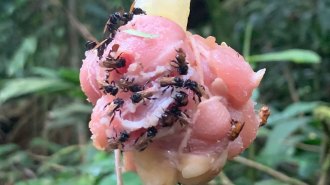
Gut bacteria let vulture bees eat rotting flesh without getting sick
Acid-producing bacteria in the gut of vulture bees let these “weirdos of the bee world” safely snack on animal carcasses.
- Animals
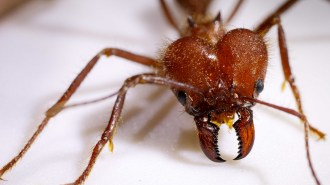
How metal-infused jaws give some ants an exceptionally sharp bite
Some small animals make cuts, tears and punctures that they couldn’t otherwise do using body parts reinforced with metals such as zinc and manganese.
- Science & Society
Racism lurks in names given to plants and animals. That’s starting to change
Racist legacies linger in everyday lingo for birds, bugs and more. Some scientists see the chance to change that.