5,553 results
5,553 results for: Forests
- Microbes
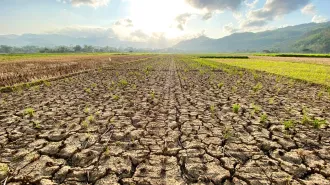
How climate change may increase antibiotic resistance
Rising heat and drought may spur bacteria to exchange antibiotic resistance genes, with potential risks to human health.
-
Life in all of its complexity
Editor in Chief Nancy Shute talks about life’s complexities, from its evolution on Earth as a single cell to complex human behavior.
- Paleontology
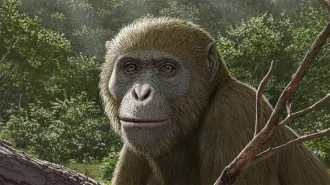
Early apes may not have evolved in East Africa
Fossil jaw remains found in Egypt suggest that the earliest modern apes evolved in North Africa, not in East Africa where most fossils have been found.
- Animals
Among chimpanzees, thrill-seeking peaks in toddlerhood
In humans, teens do the most dangerous things. In chimpanzees, that honor goes to toddlers. The difference may lie in caregiver supervision.
- Climate
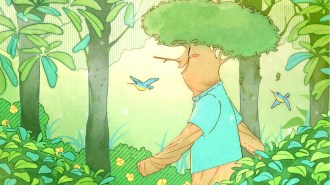
Trees can’t get up and walk away, but forests can
In fantasy worlds, trees like the Lord of the Rings’ Ents are agile and mobile. In the real world, they’re slow.
- Animals
In a Quebec park, a science game brings predator-prey dynamics to life
Results show that players’ choices echo predator-prey patterns seen in wildlife, though scientists stress the limits of the analogy.
- Plants
Plants packed close enough to touch are more resilient to stress
Signals transmitted via leaves can warn neighboring plants of stressful events, making the group collectively more resilient than plants in isolation.
- Animals
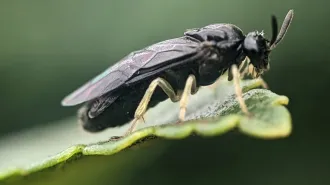
An all-female wasp is rapidly spreading across North America’s elms
The elm zigzag sawfly has spread to 15 states in five years. Now it's attacking the tree that cities planted to replace Dutch elm disease victims.
- Archaeology
Neandertals mastered fire-making tools 400,000 years ago
Archaeologists found flint, iron pyrite to strike it and sediments where a fire was probably built several times at an ancient site in England.
- Health & Medicine
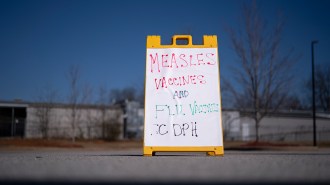
Measles cases in the U.S. hit a new 34-year high
The U.S. hasn't seen measles numbers like this since 1992. An epidemiologist explains what's driving the surge.
- Climate
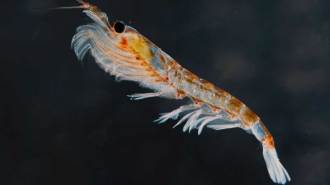
Antarctic krill eject more food when it’s contaminated with plastic
Antarctic krill don’t just sequester carbon in their poop; they also make carbon-rich pellets out of leftovers. But microplastics may throw a wrench in the works.
- Microbes
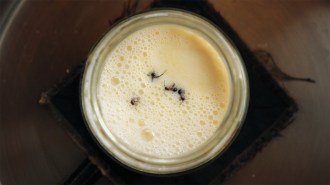
To make a tasty yogurt, just add ants (and their microbes)
Spiking milk with live ants makes tangy traditional yogurt. Researchers have identified the ants' microbial pals and enzymes that help the process.