2,702 results
2,702 results for: Monkeys
- Health & Medicine
How two coronavirus drugs for cats might help humans fight COVID-19
Scientists are exploring if drugs for a disease caused by a coronavirus that infects only cats might help also people infected with the coronavirus.
- Health & Medicine
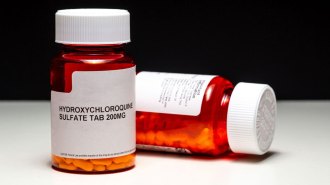
Hydroxychloroquine can’t stop COVID-19. It’s time to move on, scientists say
Hydroxychloroquine doesn’t work as antiviral or a treatment for COVID-19, an abundance of scientific data suggest.
- Health & Medicine
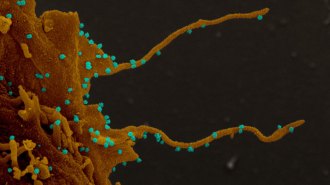
Coronavirus-infected cells sprout filaments that may spread the virus
Like other coronaviruses, the virus behind COVID-19 causes infected cells to grow spindly projections that may act as highways to other cells.
- Health & Medicine
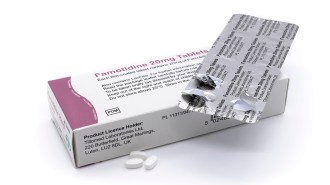
A popular heartburn medicine doesn’t work as a COVID-19 antiviral
In lab tests, an antacid didn’t prevent coronavirus infection, but clinical tests are needed to see if it can help people who already have COVID-19.
- Psychology
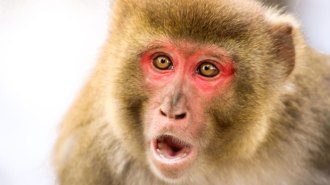
Monkeys may share a key grammar-related skill with humans
A contested study suggests the ability to embed sequences within other sequences, a skill called recursion and crucial to grammar, has ancient roots.
- Health & Medicine
Remdesivir may work even better against COVID-19 than we thought
Gilead Sciences says remdesivir cuts the chances of dying from the coronavirus, and data show the drug can curb the virus’s growth in cells and mice.
- Health & Medicine
How making a COVID-19 vaccine confronts thorny ethical issues
COVID-19 vaccines will face plenty of ethical questions. Concerns arise long before anything is loaded into a syringe.
- Archaeology
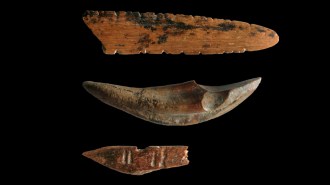
Clues to the earliest known bow-and-arrow hunting outside Africa have been found
Possible arrowheads at a rainforest site in Sri Lanka date to 48,000 years ago.
- Health & Medicine
Some existing drugs might fight COVID-19. One may make it worse
Maps of interactions between coronavirus proteins and host proteins point to drugs that may slow viral growth, but cough medicine may stimulate growth.
- Health & Medicine
As we wait for a vaccine, here’s a snapshot of potential COVID-19 treatments
Though a vaccine remains the ultimate goal, researchers are on the hunt for new ways to treat COVID-19.
- Health & Medicine
More evidence hints that hydroxychloroquine doesn’t help treat COVID-19
A malaria drug showed no benefit over standard care in two preliminary studies examining how well hydroxychloroquine works against the coronavirus.
- Paleontology
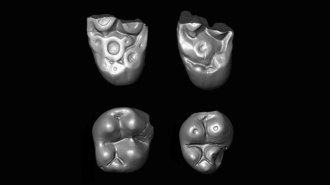
Two primate lineages crossed the Atlantic millions of years ago
Peruvian primate fossils point to a second ocean crossing by a now-extinct group roughly 35 million to 32 million years ago.