2,479 results
2,479 results for: mutations
- Animals
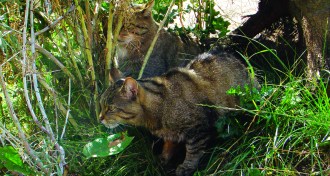
The daemon cat that never was
Buried in a volume published in 1904 is a description of a new species of cat found in Transcaucasia: Felis daemon, the Black Wild Cat.
- Genetics
DNA changes may show how whales adapted to water
Comparing the genetic material of whales has revealed DNA changes that may have helped the animals adapt to aquatic environments.
- Life
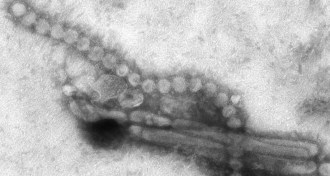
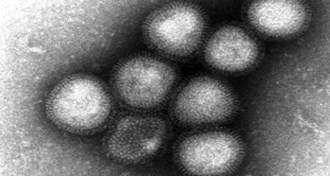
H7N9 flu still better adapted to infect birds over humans
The proteins from the avian flu appear better suited for attaching to bird, not human, molecules.
-
- Animals
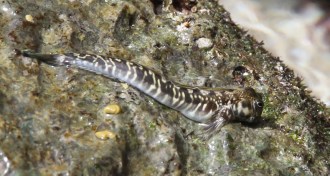
Leaping land fish avoids predators by blending in
The Pacific leaping blenny avoids being eaten by predators by blending into its rocky habitat.
- Microbes
Bacteria turn threatening in tests with immune cells
In less than 30 days, nonthreatening E. coli can transform into dangerous microbes in mice.
- Neuroscience
All mice are the same, until they’re not
A new study shows substantial differences in how two closely related mouse strains respond to drugs. It offers new options for linking genes and behavior and may change how scientists think about the similarity of their mouse strains.
- Tech
Gene Screen: Ultrasensitive nanowires catch mutations
Researchers have devised a nanowire sensor that binds to DNA molecules and produces an electrical signal almost instantaneously.
-
Brain gene is tied to obesity
A gene involved in brain chemistry influences whether a person is thin or fat.
- Health & Medicine
Could refrigeration explain Crohn’s rise?
Crohn's disease, marked by inflammation of the small intestine, could be caused by refrigeration of meats, a process that selects for hardy bacteria that handle cold temperatures well, researchers hypothesize.
-
Human genes take evolutionary turns
Researchers have identified a set of genes that has evolved an extensive pattern of alterations unique to people.
- Health & Medicine
Cluster Buster: Might a simple sugar derail Huntington’s?
A study in mice with a disease resembling Huntington's shows that a simple sugar impedes the protein aggregation that kills brain cells.