A popular sunscreen ingredient can finally be sold in the United States
The FDA added bemotrizinol to its list of permitted sunscreen chemicals
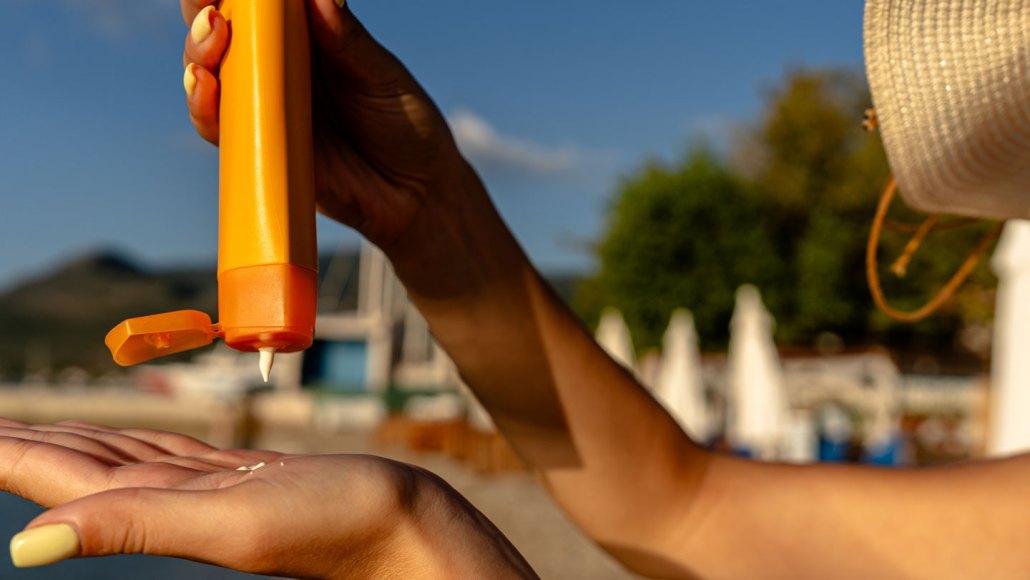
Attention sunbathers: There’s a new sunscreen ingredient in town, and it may be better than some current options.
ProfessionalStudioImages/E+/Getty Images
Glowy oils, tinted creams, misty sprays, chalky sticks, lightweight gels. Like many people gearing up for summer, my pool bag holds a stunning variety of sunscreens. They come in different forms, but all rely on a handful of the same sun-shielding ingredients. In the United States, this ingredient list hasn’t changed in 20 years — until now.
In June, the U.S. Food and Drug Administration added a new chemical, bemotrizinol, to the list of permitted sunscreen ingredients. “I think we should all be super excited,” says Tanya Hathaway, a dermatologist at Fred Hutch Cancer Center in Seattle who specializes in high-risk skin cancer patients.
Bemotrizinol is more long-lasting than some other sunscreen ingredients, it’s not readily absorbed into the bloodstream, and it offers a new line of defense against the kind of solar radiation that ages skin.
This sunscreen ingredient has been available in Europe for more than 25 years, Hathaway says. It has since become available in Japan, Canada, Australia and elsewhere. Bemotrizinol’s entrance into the U.S. market could open the pipeline for other sunscreen ingredients regularly used around the world. The FDA’s action, Hathaway says, “is a great first step.”
Bemotrizinol is a chemical sunscreen
Sunscreens rely on a couple of different tricks to shield people’s skin. Physical sunscreens use minerals like titanium dioxide and zinc oxide. They create a protective barrier that reflects the sun’s rays like a mirror flicking away light. But they can leave a white sheen on the skin — think of a lifeguard’s nose, says Jennifer Stein, a dermatologist at NYU Langone Health. “One of the problems with zinc and titanium is they don’t rub in so well,” she says. “And if people don’t like the way their sunscreen smells or feels, they’re not going to use it.”
Chemical sunscreens, which often rub in a little better, use molecules like avobenzone and oxybenzone to absorb the sun’s radiation. These molecules are not very stable. When sunlight hits them, they start to break down, Stein says — hardly ideal for a product that’s supposed to be used in the sun. Bemotrizinol is more stable than its chemical counterparts, which means people may not need to apply it as often.
The new ingredient is also adept at blocking a type of radiation from the sun called ultraviolet A1 (UVA1), which penetrates deeply into the skin. This radiation can cause damage called photoaging, Hathaway says, which includes “your skin wrinkles, your skin laxity, your pigment changes.” Current U.S. sunscreens do a good job of blocking UVB, which causes burns, but we’ve had fewer options for blocking UVA, she says. Bemotrizinol “really expands that UVA spectrum of coverage.”
Is bemotrizinol safe?
You might have seen influencers on TikTok or Instagram making DIY sunscreens or calling the ingredients in commercial brands “toxic.” Sunscreen skepticism on social media is nothing new. In Stein’s experience, patients who avoid sunscreen tend to worry about chemicals passing through the skin. That does happen with some chemical ingredients, such as avobenzone and oxybenzone. “If you apply them to large areas of the body repeatedly throughout the day, they can get absorbed into the bloodstream.”
But that doesn’t necessarily mean people should fear using them. “There have never been any studies that have shown that current ingredients on the market are unsafe,” Hathaway says. The FDA says that additional data are needed for these and other chemical sunscreens. But not bemotrizinol; it joins the minerals titanium dioxide and zinc oxide as the only three sunscreen ingredients generally recognized as safe and effective, a category the FDA calls GRASE.
Bemotrizinol “is a big molecule,” Stein says, “which means that it’s too big to squeeze through the skin cells to get down into your bloodstream.”
The FDA’s new rule for bemotrizinol goes into effect August 9, so sunscreens with the ingredient could hit shelves by late summer. Even better than a fancy new sunscreen, though, are a bunch of low-tech options that are all available today: long sleeves, hats, sunglasses, shade. “The more clothing you’re wearing,” Stein says, “the less you have to depend on sunscreen.”