Anthropology
- Humans
Neandertal DNA from cave mud shows two waves of migration across Eurasia
Genetic material left behind in sediments reveals new details about how ancient humans once spread across the continent.
- Anthropology
A coronavirus epidemic may have hit East Asia about 25,000 years ago
An ancient viral outbreak may have left a genetic mark in East Asians that possibly influences their responses to the virus that causes COVID-19.
- Anthropology
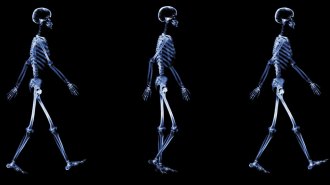
‘First Steps’ shows how bipedalism led humans down a strange evolutionary path
In a new book, a paleoanthropologist argues that walking upright has had profound effects on human anatomy and behavior.
- Anthropology
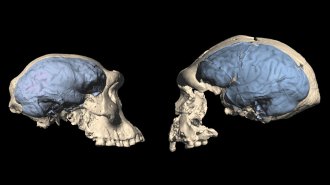
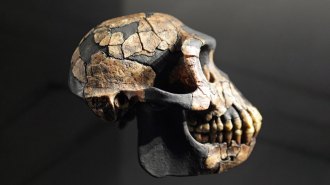
Ancient humans may have had apelike brains even after leaving Africa
Modern humanlike brains may have evolved surprisingly late, about 1.7 million years ago, a new study suggests.
- Genetics
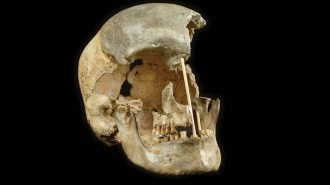
Europe’s oldest known humans mated with Neandertals surprisingly often
DNA from ancient fossils suggests interbreeding regularly occurred between the two species by about 45,000 years ago, two studies find.
- Science & Society
Parents in Western countries report the highest levels of burnout
The first survey comparing parental exhaustion across 42 countries links it to a culture of self-reliance.
- Anthropology
How using sheepskin for legal papers may have prevented fraud
Removing fat is key to turning animal skin into parchment. With sheepskin, the process creates a writing surface easily marred by scratched-out words.
- Anthropology
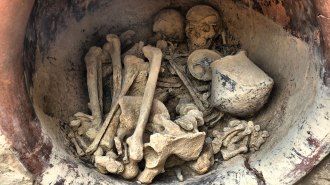
Riches in a Bronze Age grave suggest it holds a queen
Researchers have long assumed mostly men ran ancient Bronze Age societies, but the find points to a female ruler in Spain 3,700 years ago.
- Anthropology
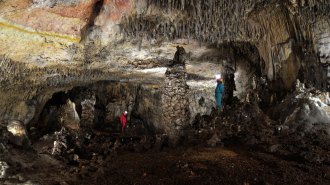
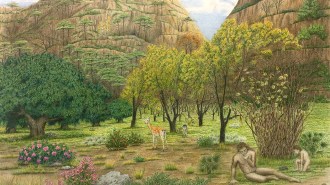
Finds in a Spanish cave inspire an artistic take on warm-weather Neandertals
Iberia’s mild climate fostered a host of resources for hominids often pegged as mammoth hunters.
- Anthropology
Ardi may have been more chimplike than initially thought — or not
A contested study of hand and foot fossils suggests this 4.4-million-year-old hominid was a tree climber and branch swinger.
- Anthropology
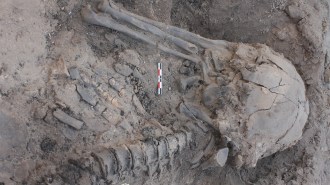
A body burned inside a hut 20,000 years ago signaled shifting views of death
Ancient hunter-gatherers burned a hut in which they had placed a dead woman, suggesting a change in how death was viewed.
- Anthropology
Humanlike thumb dexterity may date back as far as 2 million years ago
A computer analysis suggests early Homo species developed a powerful grip, giving them an evolutionary edge over some other tool-using hominids.