Archaeology
- Archaeology
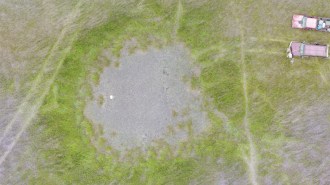
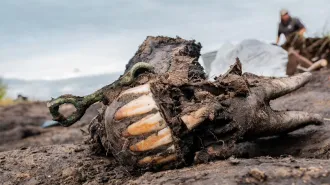
Ancient Central Americans built a massive fish-trapping system
Earthen channels directed fish into ponds that formed seasonally, providing a dietary bounty for Maya civilizations starting around 4,000 years ago.
- Anthropology
How does a fossil become a superstar? Just ask Lucy.
Geologic good fortune, skilled scientific scrutiny and a catchy name turned Lucy into an evolutionary icon.
- Archaeology
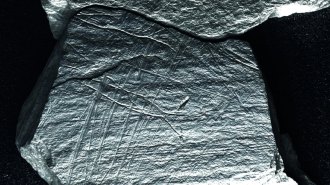
A digital exam reels in engraved scenes of Stone Age net fishing
Nearly 16,000-year-old portrayals of fish surrounded by nets had evaded detection until a new technique took magnification to a new level.
- Archaeology
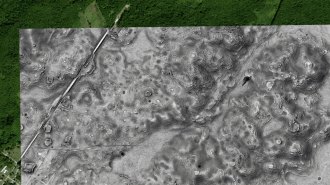
A huge, ancient Maya city has been found in southern Mexico
Lasers revealed that the city spanned roughly the same area as Beijing and may have been among the most densely populated in the region.
- Archaeology
A race to save Indigenous trails may change the face of archaeology
As construction of a pipeline nears, an effort to preserve an Indigenous trail in Canada tests whether heritage management can keep up with advances in archaeology.
- Archaeology
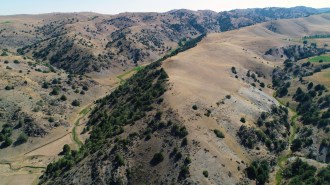
Silk Road cities reached surprising heights in Central Asia’s mountains
Drones with lasers revealed hidden urban centers that may have aided trade and travel through mountainous regions during medieval times.
- Archaeology
Ancient Scythians had cultural roots in Siberia
A possible sacrificial ritual from around 2,800 years ago suggests mounted herders from Siberia shaped a Eurasian culture thousands of kilometers away.
- Archaeology
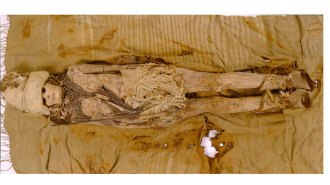
The world’s oldest cheese is now revealing some of its secrets
A DNA analysis of the kefir cheese, first found about 20 years ago on 3,600-year-old mummies in China, confirms its age and pinpoints its origins.
- Anthropology
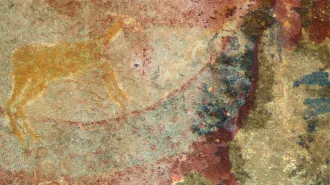
Fossils of an extinct animal may have inspired this cave art drawing
Unusual tusks on preserved skulls of dicynodonts influenced the look of a mythical beast painted by Southern Africa’s San people, a researcher suspects.
- Archaeology
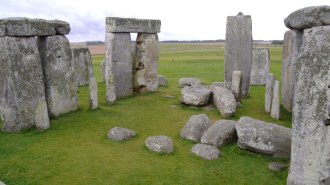
Stonehenge’s mysterious Altar Stone had roots in Scotland
New analyses indicate that this weighty piece of the site’s architecture, once thought to come from Wales, was somehow moved at least 750 kilometers.
- Archaeology
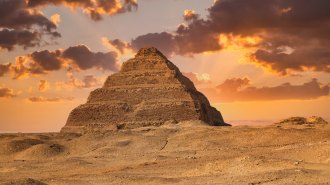
Was Egypt’s first pyramid built with hydraulics? The theory may hold water
A controversial analysis contends that ancient engineers designed a water-powered elevator to hoist stones for King Djoser’s pyramid.
- Archaeology
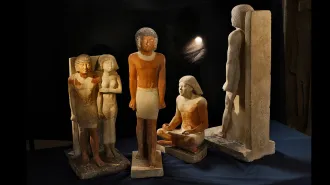
Ancient Egyptian scribes’ work left its mark on their skeletons
Years of hunching over, chewing pens and gripping brushes left the skeletons of Egyptian scribes with telltale marks of arthritis and other damage.