A puzzling mix of artifacts raises questions about Homo sapiens' travels to China
New analysis suggests Shiyu holds the oldest evidence of H. sapiens in northeast Asia
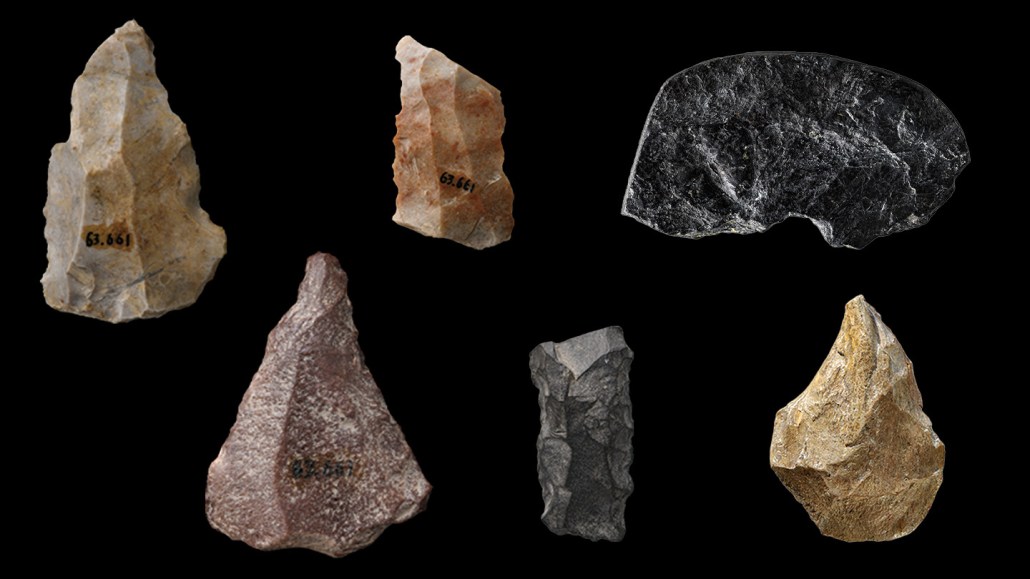
An unusual array of artifacts dating to around 45,000 years ago in northeastern China reflects cultural mixing of Homo sapiens newcomers with unidentified local groups, researchers say. These finds include two stones with platforms where flakes were pounded off (far left, top and bottom), two rectangular stone implements (center, top and bottom), a partial disk made of graphite (top right) and a possible bone tool (bottom right).
S.-H. Yang et al/Nature Ecology & Evolution 2024