Environment
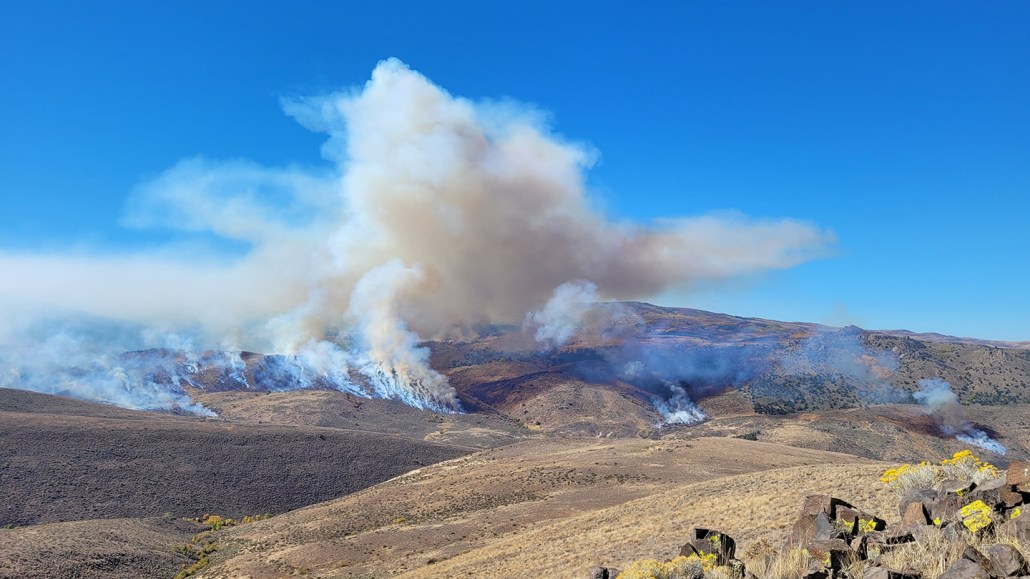
A fire’s rumble reveals where it’s burning
Researchers tracked a prescribed grassland fire using infrasound, sound waves pitched too low for people to hear.
We summarize the week's scientific breakthroughs every Thursday.
The inferno that sent toxic smoke billowing toward the United States won't be the last. Officials are now battling both the wildfires and misinformation.
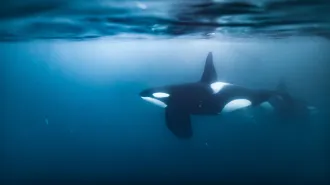
This strategy expands orcas’ already broad repertoire for dispatching different types of prey.
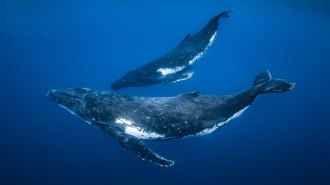
Scientists documented humpback whales hunting together at the seafloor, coordinating their arrival to scoop up sand lances.
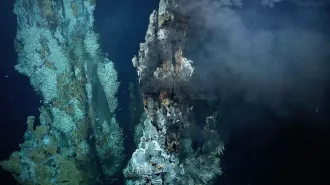
The finding shows how life spreads between isolated deep-sea vents — and how closely those ecosystems are tied to the sunlit ocean.
Atmospheric rivers bring heavy rain and floods, but if they don’t come around, it could mean drought. A new global map reveals little-known pathways.
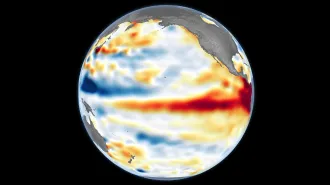
Marine cloud brightening could cool part of the Pacific and weaken extreme El Niños, simulations suggest. But the approach could have risks.
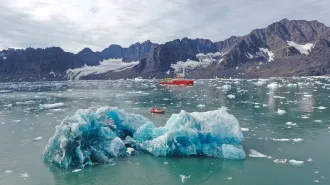
The ambitious expedition aims to fill data gaps about the glacier-sea boundary to predict when the world might tip into a catastrophic climate regime.
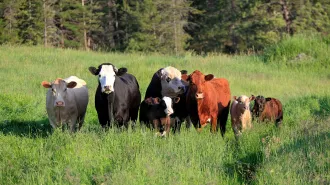
A whole-genome analysis of Beefalo, a hybrid bison-cattle breed, suggests very few individuals have any bison DNA at all, a new study reports.
Samples collected at daring heights provide evidence for an untested theory of tree drought adaptation, while countering another.