Life
We summarize the week's scientific breakthroughs every Thursday.
- Animals
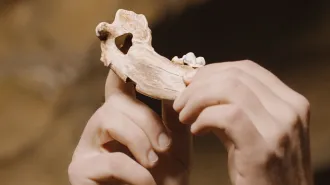
When were dogs domesticated? The oldest known dog DNA offers clues
Two new studies suggest that genetically stable dogs were living among humans in Europe by about 14,000 years ago.
- Neuroscience
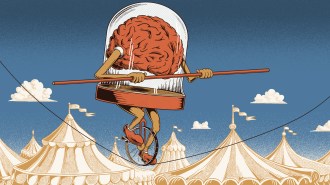
Clumps of mouse brain cells can learn to play a virtual game
Sure, playing video game is fun. But the ability of tiny brain organoids to pick up a skill could provide insight into how healthy brains work.
- Physics
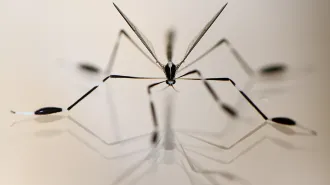
These insects fly with their legs. Physics explains how
Phantom crane flies change the angle of their splayed legs to increase or reduce drag, helping them navigate varying winds.
- Animals
Female giant rainforest mantises grow up to strike harder than males
Scientists tracked mantis strike force from youth to adulthood, showing females eventually hit far harder than males. Why is a mystery.
- Space
How realistic is Project Hail Mary?
Ryan Gosling is on a mission to save the sun — and Earth — from star-killing microbes. Science News dissects the science behind the sci-fi movie.
- Plants
Check out 6 ways orchids use tricks to reproduce
This spring, these six orchids will lure pollinators with mimicry, scent or other unusual strategies.
- Animals
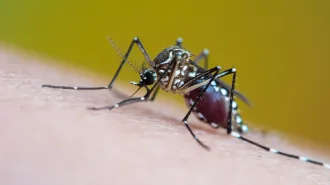
Mosquitoes get the ‘I’m full’ signal from their butts, not their brains
Mosquitoes stop feeding because signals from rectal cells tell them they’re full, offering a target for preventing human bites.
- Microbes
How warming is shifting microbial worlds
Climate change is affecting microbes, and that has implications for all life on Earth.
- Animals
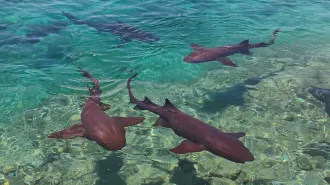
Sharks are ingesting drugs in the Bahamas
Nearly one third of sharks studied near the Bahamas’ Eleuthera Island were found to have caffeine, painkillers and other drugs in their bloodstreams.
- Animals
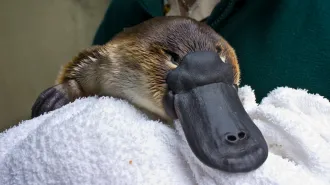
Platypus fur has a surprising feature seen only in bird feathers
Platypuses are the first mammals known to have hollow melanosomes, pigment-bearing structures found in the hair of many animals.
- Animals
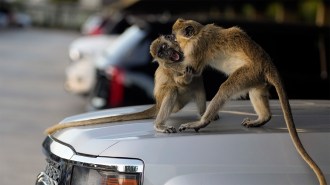
Wild monkeys invaded Florida. Should people protect them?
A colony of African vervets in Dania Beach raises big questions about how humans can and should manage nonnative species.
- Neuroscience
Yaks may hint at a way to treat brain diseases like MS
A genetic mutation tied to keeping the brain healthy at high altitudes may point to a way to repair nerve damage, experiments in mice show.