Life
We summarize the week's scientific breakthroughs every Thursday.
- Neuroscience
Pregnancy depression is on the rise, a survey suggests
Women today may be at greater risk of depression during pregnancy than previous generations.
- Animals
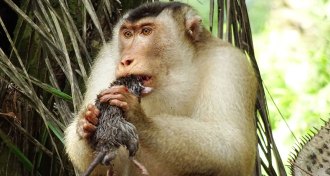
Malaysia’s pig-tail macaques eat rats, head first
Pig-tail macaques are seen as a menace on Malaysian palm oil plantations, but may be helping to reduce rodent populations.
- Life
The right mix of gut microbes relieves autism symptoms in the long run
Replacing missing gut microbes improves autism symptoms in children even two years later.
- Archaeology
Ötzi loaded up on fatty food before he died
A new analysis provides a complete picture of what was in Ötzi the Iceman’s stomach when he died.
- Health & Medicine
Cancer cells engineered with CRISPR slay their own kin
Scientists can program the stealth cells to die before creating new tumors.
- Ecosystems
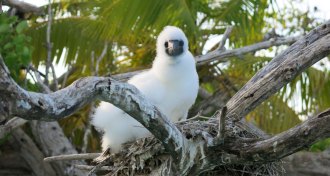
Bird poop helps keep coral reefs healthy, but rats are messing that up
Eradicating invasive rats from islands may help boost numbers of seabirds, whose droppings provide nutrients to nearby coral reefs.
- Science & Society
In research, detours are a key part of discovery
Editor in Chief Nancy Shute discusses the scientific process and the often contradictory research about Alzheimer's disease.
- Climate
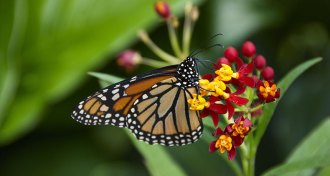
Bloodflowers’ risk to monarchs could multiply as climate changes
High atmospheric carbon dioxide levels can weaken the medicinal value of a milkweed that caterpillars eat, and high temperatures may make the plant toxic.
- Life
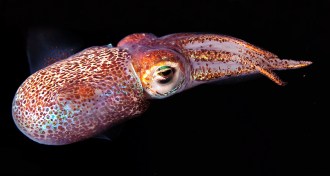
Bobtail squid coat their eggs in antifungal goo
Hawaiian bobtail squid keep their eggs fungus-free with the help of bacteria.
- Paleontology
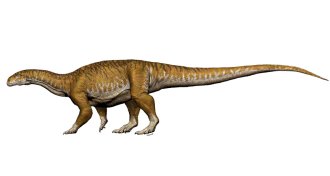
Long-necked dinosaurs grew to be giants in more ways than one
Some early relatives of giant, long-necked sauropods may have used a different strategy to grow to colossal sizes than previously thought.
- Animals
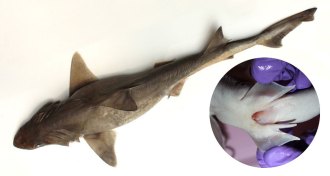
Surprise! This shark looks like a male on the outside, but it’s made babies
External male reproductive organs hid internal female capacity to give birth among hermaphrodite sharks in India.
- Neuroscience
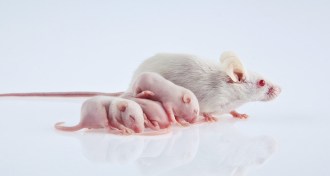
Vaginal microbes in mice transfer stress to their pups
During birth, microbes from a stressed mouse mother can carry some aspects of stress to her offspring.