Life
We summarize the week's scientific breakthroughs every Thursday.
- Health & Medicine
Newfound airway cells may breathe life into tackling cystic fibrosis
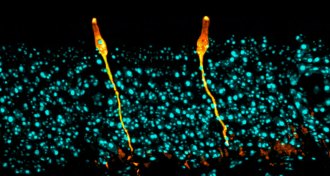
A newly discovered cell in the lining of the airways is the primary site of activity for the gene that, when defective, causes cystic fibrosis.
- Animals
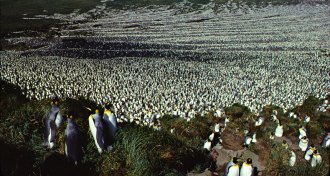
With one island’s losses, the king penguin species shrinks by a third
Once home to the largest known colony of king penguins, Île aux Cochons has lost most of its birds for unknown reason.
- Neuroscience
Soccer headers may hurt women’s brains more than men’s
Women sustain more damage from heading soccer balls than men, a brain scan study suggests.
- Health & Medicine
A medical mystery reveals a new host for the rat lungworm parasite
Doctors report that A. cantonensis was transmitted to two people who ate raw centipedes, but you can get it from other creatures as well.
- Neuroscience
Anxiety in monkeys is linked to hereditary brain traits
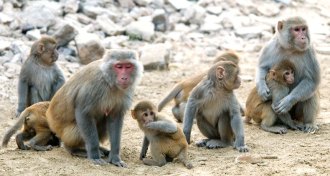
A key brain connection may be behind childhood anxiety, brain scans of monkeys suggest.
- Health & Medicine
This tick may play a part in gumming up your arteries
Having antibodies to a sugar tied to red-meat allergy is associated with more plaque in the artery walls, a small study shows.
- Microbes
How a slime mold near death packs bacteria to feed the next generation
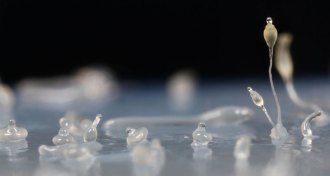
Social amoebas that farm bacteria for food use proteins to preserve the crop for their offspring.
- Animals
Got an environmental problem? Beavers could be the solution
A new book shows how important beavers have been in the past — and how they could improve the landscape of the future.
- Genetics
Most Americans think it’s OK to tweak a baby’s genes to prevent disease
Americans generally favor tweaking a baby’s genes to reduce the chance of getting a disease, but think boosting intelligence is a step too far.
- Genetics
Here’s why wounds heal faster in the mouth than in other skin
Wounds in the mouth heal speedily thanks to some master regulators of immune reactions.
- Health & Medicine
Lowering blood pressure may help the brain
Aggressively treating high blood pressure had a modest positive effect on the development of an early form of memory loss.
- Tech
Readers share their experiences with DNA ancestry tests
Readers delighted in learning about Emmy Noether, and asked about autonomous taxis and how the first Americans may have arrived via coastal routes.