All Stories
- Health & Medicine
Bad kitty: Cat bites can cause nasty infections
Three in 10 patients seeking treatment for hand bites were hospitalized, study finds.
- Animals
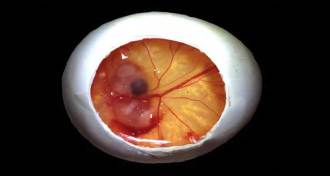
Embryos in eggs move to get comfy
Even before hatching, Chinese alligators, snapping turtles and some relatives can shift toward favorable temperatures.
- Planetary Science
Moon like blue cheese?
The lunar surface turns out to have more grit than scientists thought.
- Climate
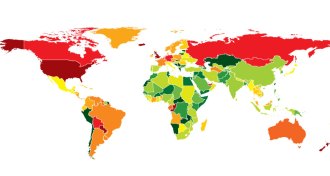
Biggest climate warmers
The United States, China, Russia, Brazil, India, Germany and the United Kingdom are responsible for more than 60 percent of the 0.74 degree Celsius rise in global average temperature observed from 1906 to 2005.
- Climate
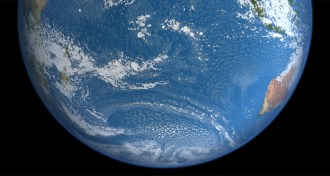
Strong winds may have waylaid global warming
Gusts over the Pacific Ocean may have stashed heat underwater since 2001.
- Science & Society
Naturalists at Sea
For centuries after Columbus, the flora and fauna of the New World remained a mystery to Europeans. But in the 1600s and 1700s, explorers began to visit and describe what were then considered remote corners of the Earth.
- Climate
Weather patterns over Southern Hemisphere have a regular pulse
Variations in energy and rainfall over the Southern Hemisphere follow a pattern that repeats every 20 to 30 days.
- Neuroscience
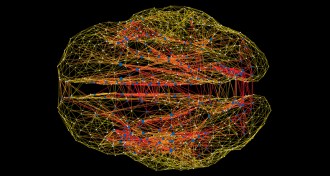
Cataloging the connections
Though a complete map of the brain’s connections is many years away, the mathematical theory of networks can help fill in some of the blank spots.
- Neuroscience
Brain shot
Deciphering how the brain’s circuitry produces thought and behavior is an ambitious and enticing goal on the scale of the Apollo Program or the Human Genome Project. But the neuroscientists involved in a new federal effort have many challenges ahead.
- Math
To make science better, watch out for statistical flaws
Study denying that most medical research papers are wrong may turn out to be wrong.
- Earth
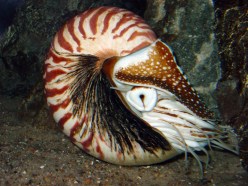
Ammonite jaws provide a window into ancient climate
Temperature of marine environment can be determined from cephalopod fossils.
- Genetics
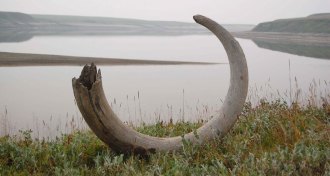
When flowers died out in Arctic, so did mammoths
Genetic analysis finds vegetation change in the Arctic around same time as megafauna extinction.