All Stories
- Genetics
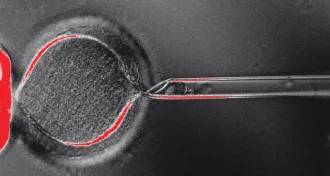
Year in Review: Caffeine triggers cloning advance
To successfully clone human cells, eggs must be dunked in the stimulant.
- Animals
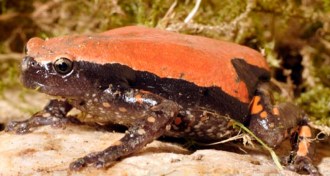
African frog conceals itself with chemicals
Two small peptides keep the West African savanna frog from being stung by ants.
- Humans
Year in Review: Language learning starts before birth
Babies seem familiar with vowels and words heard while in the womb.
- Environment
Stillbirth rates tied to lead in drinking water
Fetal death rates rose in Washington, D.C., in parallel with two recent spikes in drinking water’s lead levels.
- Science & Society
Year in Review: High court rules against gene patents
The justices’ decision opens the way for choices in DNA testing.
- Health & Medicine
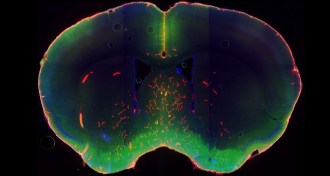
Year in Review: Sleep clears the cluttered brain
Some forms of brain washing are good, like the thorough hosing the brain gets during sleep.
- Life
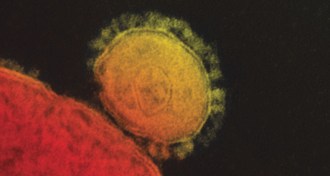
Year in Review: A double dose of virus scares
Outbreaks of two deadly viruses captured the world’s attention in 2013, but neither turned into the global pandemic expected to strike one of these years.
- Plants
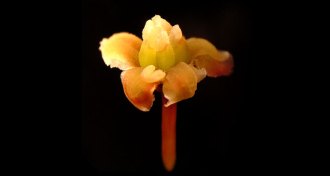
Lone survivor of ancient flowers is gluttonous gene consumer
The rare Amborella shrub has engulfed whole genomes from other species.
- Humans
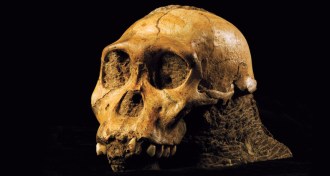
Year in Review: New discoveries reshape debate over human ancestry
Human evolution appears poised for a scientific makeover as the relationships among early hominids are disputed.
- Health & Medicine
Your youngest kid is three inches taller than you think
Mothers fall prey to the “baby illusion” and consistently underestimate the height of their youngest kid.
- Cosmology
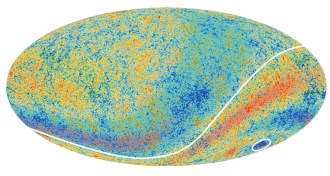
Year in Review: Planck refines cosmic history
The satellite data hint at a slower expansion rate for universe.
- Astronomy
Exoplanet dangerously close to demise
Kepler-91b could be on the brink of death — at least on astronomical time scales.