All Stories
- Neuroscience
Year in Review: Obama unveils brain initiative
In April, the president announced an ambitious plan to reveal the human brain’s secrets.
- Psychology
Year in Review: DSM-5’s controversial debut
The diagnostic manual updates disorder criteria.
- Physics
Year in Review: Below absolute zero, but hot
Lab trickery pushes atoms to a negative temperature.
- Astronomy
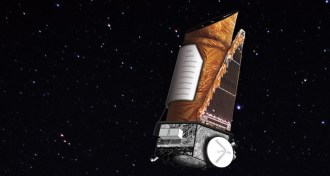
Year in Review: Death of a planet hunter
The Kepler space telescope finishes a brilliant career.
- Animals
A year of rediscovered species
Thousands of species go extinct each year, but at least a few are found after many years of being lost.
- Astronomy
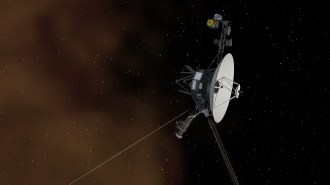
Year in Review: Voyager 1 reaches interstellar space
The planetary probe is the first human-made object to break out of the heliosphere.
- Health & Medicine
Year in Review: Putting kids at risk
U.S. parents increasingly are delaying their children’s vaccination.
- Neuroscience
Bad memories fade with a short jolt
Research illustrates the vulnerability of the brain’s information storage.
-
- Climate
Year in Review: Carbon dioxide levels pass milestone
Although scientists are confident about humankind’s role in climate change, they still have a lot to learn about the magnitude and timing of future climate shifts.
- Environment
Protein fibers trap greenhouse gas
The method could scrub exhaust from cars and power plants.
- Science & Society
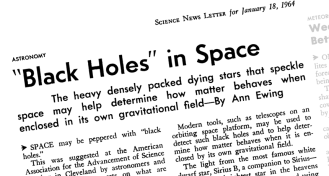
50 years later, it’s hard to say who named black holes
In 1964, Science News Letter was the first publication to print the term black hole, but nobody is really sure who used the term first.