All Stories
- Life
Some lucky birds escaped dino doomsday
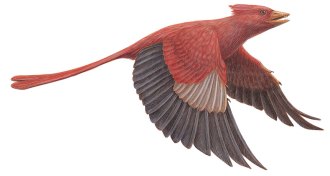
Dino doomsday took out early birds too, but a lucky few survived.
- Earth
Devastation detectives try to solve dinosaur disappearance
Dinosaurs and others faced massive losses 66 million years ago from an asteroid impact, volcanic eruptions or maybe a mix of the two.
- Paleontology
Bony head ornaments signal some supersized dinosaurs
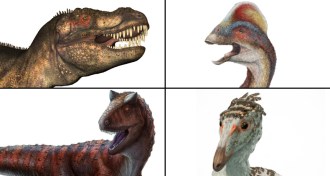
Bony headwear, like bumps and horns, is tied to bigger bodies in the theropod dinosaur family tree.
- Paleontology
Ancient otter of unusual size unearthed in China
Fossils unearthed in China reveal a newly discovered, now-extinct species of otter that lived some 6.2 million years ago.
- Paleontology
Ancient giant otter unearthed in China
Fossils unearthed in China reveal a newly discovered, now-extinct species of otter that lived some 6.2 million years ago.
- Environment
Humans’ stuff vastly outweighs humans
The human-made technosphere weighs 30 trillion tons and surpasses the natural biosphere in mass and diversity, researchers estimate.
- Life
Asteroid barrage, ancient marine life boom not linked
Impacts from asteroid debris probably didn’t trigger the boom in marine animal diversity around 471 million years ago during the Great Ordovician Biodiversification Event.
- Health & Medicine
A ban on screens in bedrooms may save kids’ sleep
Screens are associated with worse sleep in kids, and not just because of their lights and noises.
- Paleontology
Baby dinosaurs took three to six months to hatch
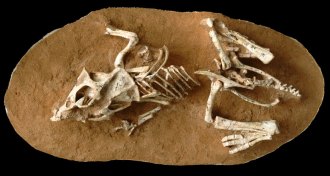
Growth lines on teeth indicate a surprisingly long incubation period.
- Physics
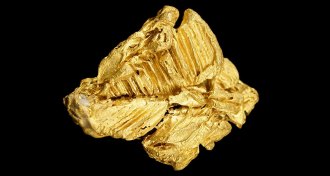
Chemists strike gold, solve mystery about precious metal’s properties
A longstanding puzzle about gold’s properties has been solved with more complex theoretical calculations.
- Archaeology
Real-life adventure tale details search for legendary city
"The Lost City of the Monkey God" recounts archaeological expedition to uncover truth behind Honduras’ “White City" myth.
- Life
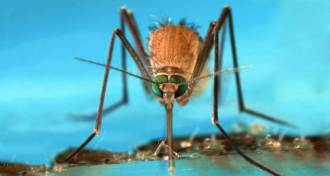
What a mosquito’s immune system can tell us about fighting malaria
Immune system messengers carried in microscopic sacs help mosquitoes fend off malaria, new research suggests.