All Stories
- Animals
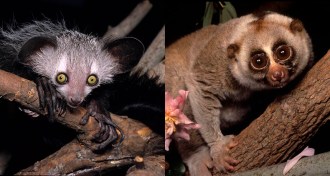
Some primates prefer nectar with a bigger alcohol kick
Aye-ayes and slow lorises may be able to discern the alcohol content of boozy nectar and go for more potent drinks.
- Physics
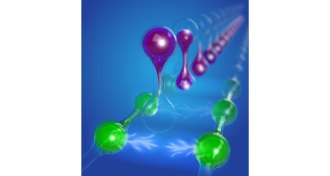
Electrons have potential for mutual attraction
Electrons usually repel each other, but new research shows pairs of electrons can be attracted due to their repulsion from other electrons.
- Neuroscience
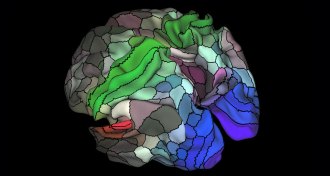
New brain map most detailed yet
By combining different types of data, researchers have drawn a new detailed map of the human brain.
- Animals
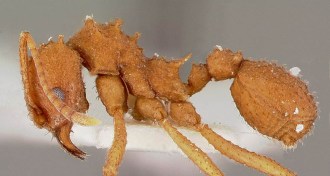
Tiny ants move a ton of soil
For the first time, scientists have quantified how much soil ants move underground.
- Planetary Science
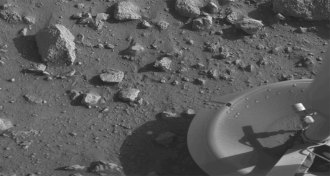
40 years ago, Viking 1 pioneered U.S. exploration on Mars
Forty years ago, Viking 1 became the first U.S. mission to land safely on the surface of Mars.
- Health & Medicine
Anesthesia steals consciousness in stages
Brains regions that are synchronized when awake stop communicating as monkeys drift off.
- Genetics
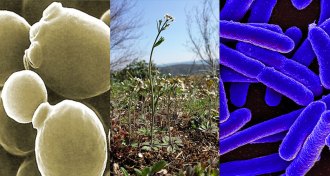
Swapping analogous genes no problem among species
Many genes are interchangeable between yeast, bacteria, plants and humans.
- Astronomy
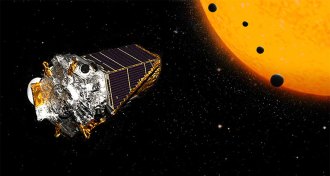
Kepler tally grows: 104 more exoplanets confirmed
Kepler space telescope adds another 104 planets to its growing census of worlds in our galaxy.
- Health & Medicine
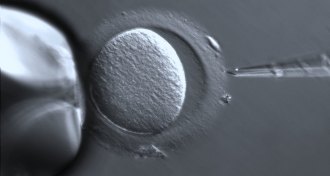
IVF doesn’t up long-term breast cancer risk, study says
A Dutch study of more than 25,000 women over two decades suggests that IVF-treated women are no more likely to get breast cancer than other women.
- Genetics
Herbicide no match for fruit flies’ gut microbes
Friendly gut bacteria team up to break down herbicide that might otherwise harm fruit flies.
- Health & Medicine
No one-fits-all healthy diet exists
Mice’s response to diet varies with their genes.
- Physics
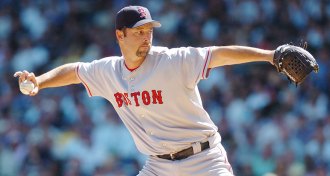
Scientists throw a curve at knuckleball explanation
Wildly swerving pitches may be the result of a phenomenon known as a “drag crisis”