All Stories
- Particle Physics
Readers ponder gravity wave physics
Gravitational waves, the benefits of fat and more reader feedback.
- Animals
Why Labrador retrievers are obsessed with food
A genetic variant could explain obesity trends seen in Labrador retrievers.
- Neuroscience
A breakdown product, not ketamine, may ease depression
Ketamine’s breakdown product, not the drug itself, eases depression, a mouse study suggests.
- Animals
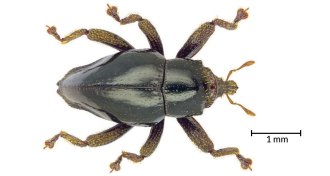
New species of hairy weevil named after Chewbacca
A new weevil species,Trigonopterus chewbacca, joins the ranks of insects with a Star Wars moniker.
- Tech
High-fashion goes high-tech in ‘#techstyle’
‘#techstyle,’ an exhibit at the Museum of Fine Arts in Boston, considers how technological innovations such as 3-D printing are influencing fashion.
- Life
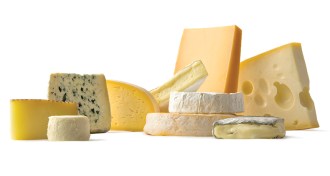
Studying cheese reveals how microbes interact
Microbiologist Rachel Dutton uses cheese rinds to study how microbes form communities.
- Animals
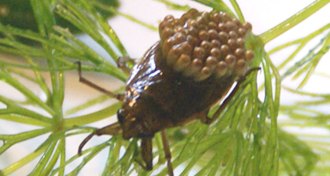
Male giant water bugs win females by babysitting
Female giant water bugs prefer males already caring for eggs, an evolutionary force for maintaining parental care.
- Animals
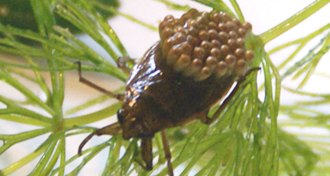
Male giant water bugs win females by babysitting
Female giant water bugs prefer males already caring for eggs, an evolutionary force for maintaining parental care.
- Science & Society
Gun research faces roadblocks and a dearth of data
Gun violence research is stifled by funding shortfalls and limitations on data access.
- Science & Society
Scientific evidence should inform politicized debates
Our editor in chief discusses science's role in informing divisive political and social issues.
- Earth
Rainwater can help trigger earthquakes
Rainwater plays a major role in the triggering of earthquakes along New Zealand’s Alpine Fault.
- Astronomy
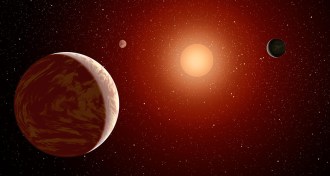
Nearby exoplanet trio new target in search for life
Three nearby exoplanets might be good spots to go looking for signs of alien life.