All Stories
- Science & Society
Banana peel slipperiness wins IgNobel prize in physics
Cartoons taught us that banana peels make for a slick trip to the floor, but scientists decided to find out just how slippery they could be.
- Health & Medicine
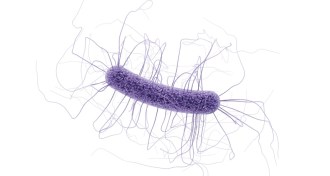
Doctors enlisted to turn the tide on antibiotic resistance
Antibiotic stewardship requires education, diligence, and changes in prescribing. At some hospitals, it’s beginning to halt a dangerous trend.
- Health & Medicine
Not all the ‘baby friendly’ rules are rooted in science
The Baby Friendly Hospital Initiative has a noble goal of encouraging breastfeeding, but some of its recommendations may be based on shaky science.
- Astronomy
Enormous black hole resides at core of tiny galaxy
A small galaxy stores 15 percent of its mass in a black hole, suggesting compact galaxies might be shreds of once larger galaxies.
- Health & Medicine
Obama takes aim at antibiotic resistance
The White House offers an incentive for better diagnostics and calls for new meds and more stewardship programs against antibiotic resistance.
- Tech
Long after JFK assassination, gunshot forensics still limited
The Warren Commission Report included the results of a neutron activation analysis test of Lee Harvey Oswald. But even that high-tech analysis can't distinguish the type of weapon fired.
- Life
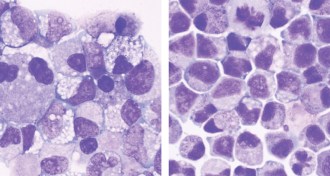
Molecule boosts numbers of stem cells in umbilical cord blood
A new molecule multiplies stem cells in umbilical cord blood. More blood-making stem cells could mean more effective transplants for people with blood cancers.
- Science & Society
World population may reach 12.3 billion in 2100
The number of people on the planet is likely to keep rising over the next century.
- Genetics
Genetic data rewrite the prehistory of Europe
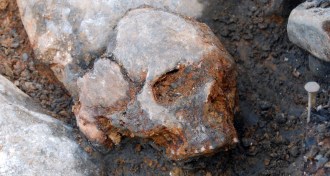
The genomes of nine ancient and 2,345 living humans have changed the story of modern Europeans' origins.
- Earth
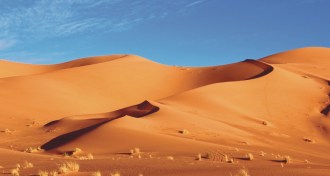
Shrinking ancient sea may have spawned Sahara Desert
The Saharan Desert probably formed 7 million years ago as the ancient Tethys Sea, the forerunner of the Mediterranean Sea, shrank.
- Tech
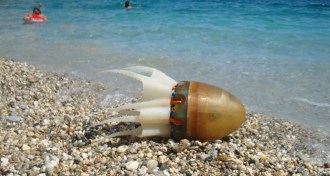
Octobot uses webbed arms to swim faster
Octopus-inspired robot could one day help researchers observe underwater ecosystems.
- Math
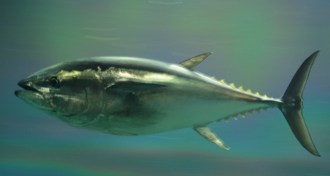
Sharks’ hunting paths may not be driven by math
Penguins, tuna, sharks and other marine hunters have been shown to use math to find food. But simulations suggest the behavior is a result of rough water, not complex calculation.