Morbid doesn’t want you to fall for antiaging hype
Saul Justin Newman’s new book is a salient takedown of longevity science
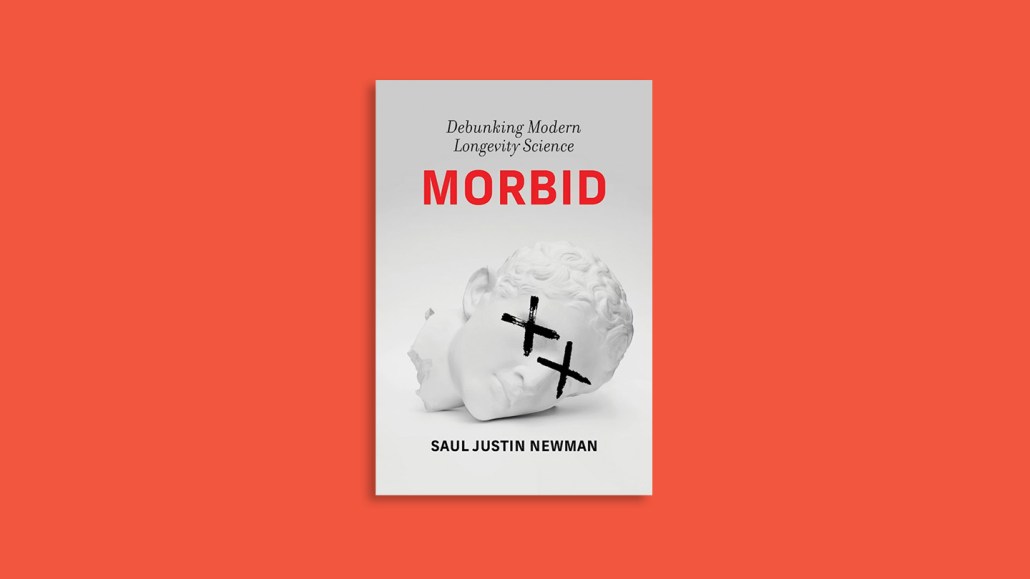
Morbid, by Oxford scientist Saul Justin Newman, exposes fatal flaws in longevity research and medicine.
Morbid
Saul Justin Newman
The MIT Press, $29.95
It’s not often that a nonfiction science book exposes a story so scandalous it rivals something seen on reality TV. Morbid, by scientist and self-described “cheeky scamp” Saul Justin Newman, does just that, plunging readers into the mayhem and misdeeds of modern longevity science.
Newman, of the University of Oxford, writes about the world’s (purported) oldest people and how to (allegedly) extend your life. Spoiler alert: There’s no magic-bullet, fountain-of-youth wonder drug that’s going to keep you young and spry. And take any stories you may have read about people living past 100 with a heaping spoonful of salt.
Consider the case of Irma Borgoglio: Neighbors thought the supposed centenarian was alive and well but she actually was quite dead. Borgoglio’s son had been collecting her pension while keeping her body in the freezer.
Borgoglio was part of an extreme-age database that had been validated by researchers. And her case was no exception, Newman discovered. When he kicked the tires on such databases, which scientists use to gauge maximum human life span and pinpoint locations and diets tied to longevity, Newman uncovered a mountain of problems. Many examples of extreme longevity appeared to stem from errors in record keeping or — like Borgoglio — were straight-up scams. “Could most of the world’s oldest people be just … shonky data?” he writes.
It’s a question Newman approaches with humor and locomotive force, hurtling readers on a journey to track down these superagers. It is a thrilling ride that exposes cracks in the case of a 122-year-old woman and deflates the hype around “blue zones,” areas around the world where people supposedly live superlong, healthy lives. (For his work exposing flaws in record-keeping systems in blue zones, Newman won a 2024 Ig Nobel prize. The Ig Nobels honor achievements “that make people laugh, and then think.”)
Newman is an expert debunker and he’s not out to make friends. With logic, math and wit, he pokes holes in high-profile longevity research and undercuts a whole field of antiaging “medicine,” including drugs for which Big Pharma shelled out big bucks. (Remember resveratrol, the red wine compound that shot to fame in the early 2000s with claims of antiaging powers? Turns out high doses mainly just cause diarrhea.)
Where Morbid starts off as a runaway train, it loses some steam when digging into the intricacies of aging biology. Newman seems to have done his homework and has enviable skill in statistics. But his musings on telomeres, cell recycling and evolutionary fitness might leave some readers — including this one — with more questions than answers. I imagine he’d be OK with that and any skepticism. After all, that’s one of the book’s underlying themes: You can’t believe everything you read, even if it does appear in a prestigious scientific journal or a popular science book.
Though Morbid takes a mostly lighthearted approach to its takedown of longevity science, Newman makes clear that there is certainly something sinister afoot. There’s money to be made in projects to hack longevity, he writes. Scientists researching a seemingly promising antiaging compound can launch companies that market their product as supplements without proof that those products actually do any good. Instead of throwing money at the newest antiaging craze or leaping to laud the latest “oldest” individual, Newman advises a more cautious approach.
“Sack the charlatans, laugh out anyone who promises a ‘cure’ to aging or carries a trademark, and give space to reproducible basic research,” Newman writes. That’s advice everyone should be able to get behind — whether you agree with his stance on the longevity field or not.
Buy Morbid from Bookshop.org. Science News is a Bookshop.org affiliate and will earn a commission on purchases made from links in this article.