Pollution
- Oceans
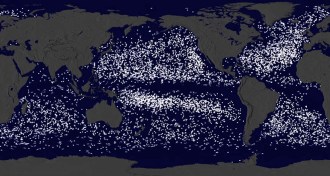
Here’s where 17,000 ocean research buoys ended up
A combined look at 35 years’ worth of ocean buoy movements reveals the currents that feed into ocean garbage patches.
- Environment
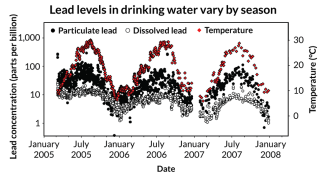
When measuring lead in water, check the temperature
Lead contamination in drinking water can be much higher during summer than winter, new research suggests.
- Environment
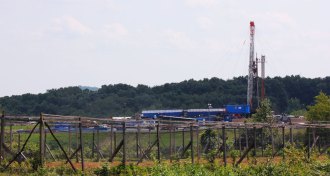
U.S. oil and gas boom behind rising ethane levels
Oil and gas operations on North Dakota’s Bakken shale are largely to blame for a recent rise in global emissions of the greenhouse gas ethane, researchers conclude.
- Climate
Wildfire shifts could dump more ice-melting soot in Arctic
Wildfires will emit more soot into the air in many regions by the end of the century, new simulations show.
- Environment
EPA boosts estimate of U.S. methane emissions
A new report by the U.S. Environmental Protection Agency revises the agency’s methane emission estimates upward by 3.4 million metric tons.
- Environment
EPA underestimates methane emissions
Methane estimates by the Environmental Protection Agency fail to capture the full scope of U.S. emissions of the greenhouse gas, studies show.
- Microbes
This microbe makes a meal of plastic
A newly identified bacterium can break down plastic waste.
- Environment
Dome effect leaves Chinese megacities under thick haze
Airborne black carbon lowers an atmospheric boundary, trapping pollution around major cities and worsening air quality, researchers propose.
- Oceans
Gulf oil spill could hasten corrosion of shipwrecks
Oil from the Deepwater Horizon disaster could hasten the corrosion of historical shipwrecks in the Gulf of Mexico, new studies of marine microbes suggest.
- Environment
Urban heat islands exist even in the Arctic
Arctic cities are a source of warming in the far north. Unlike midlatitude heat islands, poorly insulated buildings — not the sun — are a primary source.
- Earth
Ocean’s plastics offer a floating fortress to a mess of microbes
Microbes take up residence on ocean plastics, potentially causing changes in ocean environments.
- Environment
Converted milk proteins clean pollution, strike gold
A new membrane uses sticky amyloid proteins to trap contaminants in water.