All Stories by Lisa Grossman
- Astronomy
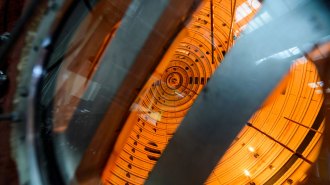
In a first, physicists re-created the sun’s spiraling solar wind in a lab
Some of the sun’s fundamental physics have been re-created with plasma inside a vacuum chamber
- Astronomy
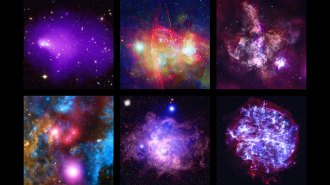
NASA’s Chandra X-ray telescope celebrates 20 years in space
The U.S. space agency has released new images for the Chandra X-ray Observatory’s 20th birthday.
- Particle Physics
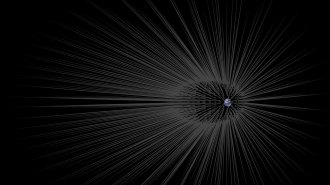
Dark matter particles won’t kill you. If they could, they would have already
The fact that no one has been killed by shots of dark matter suggests the mysterious substance is relatively small and light.
- Planetary Science
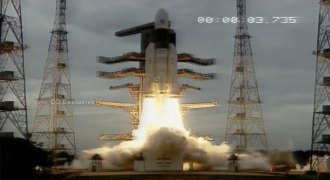
India’s first lunar lander is on its way to the moon
India’s Chandrayaan 2 mission just launched, hoping to become the first Indian spacecraft to land on the moon.
- Astronomy
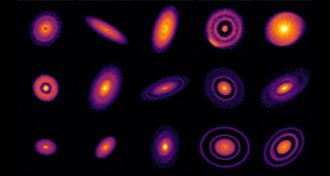
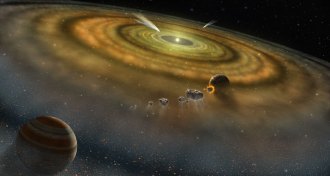
Gaps in gas disks around stars may not always mark newborn planets
New research has prompted a rethink of the theory that gaps in planet-forming disks around young stars mark spaces where planets are being created.
- Planetary Science
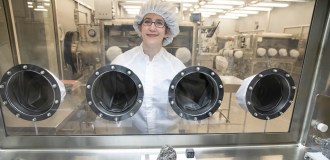
How NASA has kept Apollo moon rocks safe from contamination for 50 years
NASA wouldn’t let our reporter touch the Apollo moon rocks. Here’s why that’s a good thing.
- Planetary Science
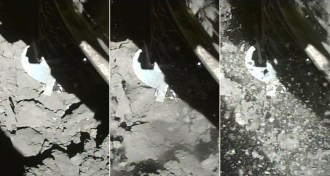
Hayabusa2 may have just snagged bits of asteroid Ryugu’s insides
In its second sampling attempt, Hayabusa2 became the first spacecraft to try to pick up some of an asteroid’s guts.
- Astronomy
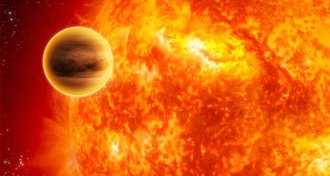
Moons that escape their planets could become ‘ploonets’
If giant planets in other star systems lose their moons, the freed objects could become “ploonets,” and current telescopes may be able to find them.
- Astronomy
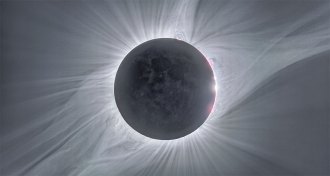
How the 2019 eclipse will differ from 2017’s — and what that means for science
This year’s total solar eclipse is visible late in the day from a relatively small slice of South America.
- Astronomy
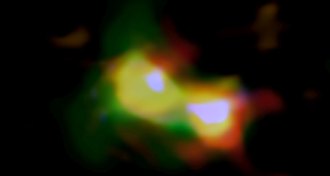
The earliest known galaxy merger occurred shortly after the Big Bang
Telescopes show two distant blobs of stars and gas swirling around each other in the young universe.
- Astronomy
A new algorithm finds nearby stars that could host hidden worlds
An algorithm dubbed “Netflix for exoplanets” identified more than 350 stars that, based on their chemistry, might have planets orbiting out of sight.
- Astronomy
The cosmic ‘Cow’ may be a strange supernova
New observations suggest the strange bright burst called the ‘Cow’ was a supernova, rather than a shredded star.