Cheers! Let’s raise a nonalcoholic glass to krill, sharks, and potatoes
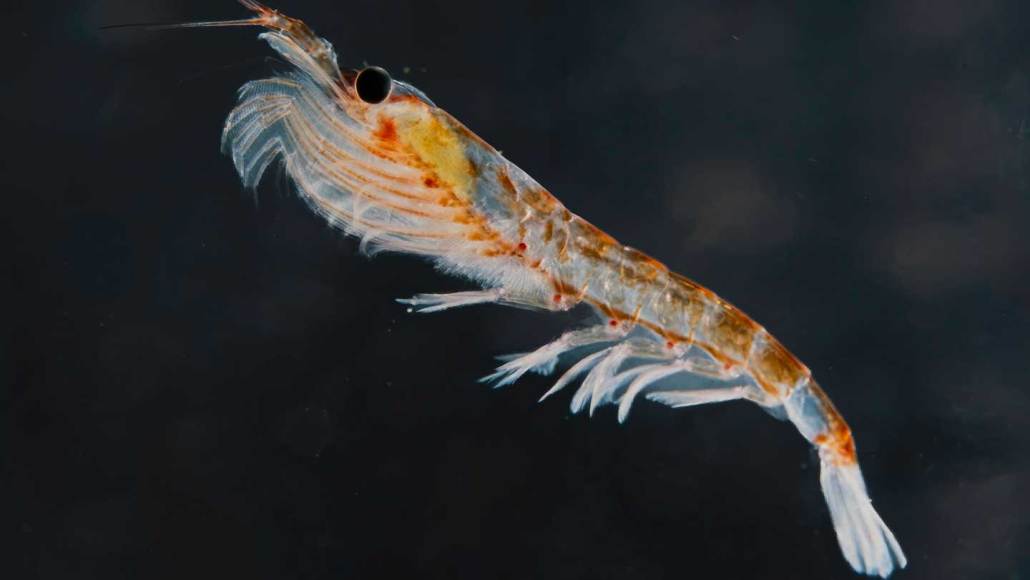
Tiny Antarctic krill (shown) are powerhouse carbon-sequesterers. In addition to their profuse poop, the krill eject compact masses of leftover food to sink to the seafloor.
Gerald Corsi / Getty Images
By Susanna Camp and Elana Spivack
🦐 The Krill Spill
The ocean’s tiniest crustaceans just delivered a giant warning. According to a recent report, microplastics are affecting how Antarctic krill eat, permanently altering the marine food web. Science News’s Carolyn Gramling reports on this unsettling finding and its impact on ocean health.
🤮 Nature’s failed filter
Krill (Euphausia superba), the tiny shrimp-like creatures that make up the foundation of the Antarctic food chain, absorb a lot of plastics from their environment (just like the rest of us). Scientists knew that these small crustaceans readily ingest microplastics, but here’s the unsettling part: once they’ve eaten this unhealthy food they tend to expel what they’re eating from their mouths. This worries scientists because the krill might be regurgitating food even when they’re still hungry, potentially affecting krill populations for the food chain. What’s more, the plastic in this rejected meal is being chopped up into even smaller pieces, which may trigger health problems in sea life. This potential plastic puke time bomb could dramatically increase the complexity and cost of remediation.
📈 Algorithmic tides are rising
Increasing public awareness of the crisis of plastic in the ocean is bringing sophisticated, long-term monitoring and autonomous intervention to existing cleanup efforts. Biodegradable materials and AI tools for robotics are inspiring scalable research methodologies powered by autonomous surface vessels and underwater remotely operated vehicles . Recent large-scale projects include using vision systems to identify plastic types, mapping ecosystem health in real time and collecting data on water quality. This convergence of deep learning, sustainable engineering and marine hardware is also attracting funding.
🤖 Robotic remediation
Here are a few innovative engineering companies doing deep dives into the issues:
- RanMarine Technology in the Netherlands is focused on using autonomous surface vehicles, such as their WasteShark robots, to remove plastic, algae, waste and oil from harbors and rivers. They’ve secured over $2 million in grants and early-stage funding.
- Clearbot, based in Hong Kong, also uses autonomous electric robots to target marine trash while avoiding marine life, with help from an AI algorithm. Their 2022 seed round valued the company at $4 million, and attracted undisclosed funding from the Alibaba Entrepreneurs Fund and others.
- The Ocean Cleanup, also based in the Netherlands, is a nonprofit research and advocacy organization working to clean pollution from marine garbage patches and coastal ecosystems. They’ve raised over $33 million in grants and crowdfunding.
Let’s wipe out plastic pollution, one krill at a time.
😵💫 The cocktail party is over
It’s last call for the debate over “healthy” drinking levels. According to the World Health Organization and some public health agencies, no amount of drinking is safe. The news coincides with a global trend toward teetotaling. SN’s Sujata Gupta reports on the data on non-alcoholic social drinking, and what this says about our health.
🍷 History and social customs
In ancient societies such as Greece’s, alcohol served as a profound social lubricant, binding communities through shared, mildly altered states. But libations back then were much weaker than the wines and spirits in today’s liquor stores, and revelry was more tightly regulated. These days, people are bringing nonalcoholic beverages into the mix.
🤑 The $46 billion solution
The no- and low-alcohol global market is expected to surge from $25.7 billion in 2024 to an estimated $46.5 billion by 2034. That’s almost double, signifying not just a trend but a structural realignment. There’s also a focus on quality, driving out the old, watery nonalcoholic beers and replacing them with high-margin, complex zero-proof spirits and ready-to-drink mocktails.
🍹 The New Adult Beverage Shelf
The biggest opportunity lies in scaling brands that appeal to discerning tastes, such as these:
- We have already seen the exit validation: Ritual Zero Proof, a top seller in zero-proof spirits, was acquired by industry giant Diageo for a reported $23 million in 2024.
- Athletic Brewing Company dominates the nonalcoholic craft beer space, with seemingly ubiquitous distribution. The company is valued at $800 million, after a 2024 funding round led by private equity giant General Atlantic.
- Lyre’s is an Australian up-and-comer with global distribution. They’ve raised over $68 million in venture funding for their range of spirits and pre-mixed mocktails.
The future of socializing is zero-proof. Bottoms up!
🍅 You Breed Tomato, I Breed Potato: Crop Interbreeding and Resilience
Pluots, tangelos and apriums are all examples of hybrid fruits. But some hybrid produce may surprise you, like one starchy tuber we all know and adore: the potato. Javier Barbuzano reports for SN on new research that shows an instance of natural interbreeding between an ancient tomato plant and a potato-like species created our beloved spuds.
🥔 A surprising mashup
About nine million years ago in the Andes mountains, a tomato plant crossbred with a species that resembled potato plants, but lacked tubers, or bulbous, subterranean plant stems that can sprout new plants from its “eyes.” This interbreeding led to tubers, which were inherited across the thousands of cultivated and wild potato varieties. A team of researchers published their findings on this hybridization in the journal Cell this past July.
After analyzing dozens of genomes from cultivated and wild potato varieties, the team found that every species examined had a mixed genetic composition with about half coming from tomatoes and half from tuberless potato plants. This consistent combination indicates potatoes began as a single hybrid crossing between these two groups.
New hybrids are often sterile because of genetic incompatibilities. Still, the cultivated potato (Solanum tuberosum) and its many tuber relatives prove that hybridization has the ability to form new, complex organs and drive evolution. And while most of the over 100 wild potato species are too bitter or toxic to eat, indigenous Andeans found a delicious wild potato variety and cultivated it, demonstrating how crop domestication and hybridization can work hand in hand.
🧬 Hybrids come to market
Humans have long been selecting for traits like high yield or pathogen resistance in staple crops like potatoes. This strategy has proven necessary in the face of blights like the 19th-century Irish potato famine and current threats like the Colorado potato beetle. But this choice has inadvertently narrowed genetic variability in cultivated potatoes, making them less adaptable to extreme environmental factors like heat and flooding. Still, selecting crops for traits associated with success has grown more popular, especially with the controversial introduction of CRISPR; the global gene-editing market is estimated to reach a valuation of over $17 billion by 2032. But there are many ways to modify crops to make them more resilient — or to create new hybrids entirely.
🌱 Hybridization for hardiness
- Wild Bioscience: A biotech spinout from the University of Oxford, this Series A crop improvement startup was founded in 2021. Its computer algorithms uncover promising genes from wild plants that could help crops weather climate change or enhance harvests for global food security. So far, it’s raised over $59 million from the Ellison Institute of Technology this past October.
- Ohalo Genetics: Founded in 2019, this startup based in Aptos, California specializes in accelerating crop growth. Their technology entails cultivating offspring plants that possess the entire genome of both parent plants — as opposed to half from each — which creates a higher likelihood of beneficial trait combinations to help them succeed. They raised $40 million in January 2024.
- Seed-X: This Series A company, founded in 2016 and based in Delaware, uses AI imaging software coupled with a massive seed data bank to identify and sort the most genetically promising seeds. In June 2022, they raised $10 million.
As advanced as our cultivation has become, a nine-million-year-old hybrid might still be the one to beat.
🦈 Sharks Bite: Sportgear Protecting Against Wildlife
In 2024, there were 71 recorded shark bites globally with seven fatalities. While your fear of sharks may be mostly irrational, that danger is dramatically higher for those who spend lots of time in the ocean, like surfers or divers. Carly Kay reports for SN on a new wetsuit that may protect its wearer from shark bites.
🏄 Built-in shark shield
Existing shark-resistant suits like full-body chain mail are heavy and make swimming difficult. Researchers from Australia — which boasts a terrific surf culture — tested four bite-resistant materials to soup up the synthetic rubber neoprene that’s common in wetsuits. One had strategic sections of chain mail, and others incorporated Kevlar — the stuff of bulletproof vests — or lightweight yet durable fibers used in sailboat ropes.
The researchers then lured white sharks and tiger sharks to a boat, baiting them to bite a buoylike object covered in either a bite-resistant or traditional wetsuit. All four materials almost entirely resisted severe damage, even when the sharks dragged and thrashed the object. The standard neoprene suits were deeply punctured, but the test materials only had shallow indentations, as if a housecat had bitten them. This innovation may prevent shark-attack victims from bleeding out, which is the primary cause of death from this rare episode.
👨🚀 A materials science market
Though shark bites are exceedingly rare, there’s value in investing in protective material development. Applications for shark-bite resistant wetsuits and clothing could extend to hikers and campers who risk bear attacks. Investing in protection against these unlikely but sometimes deadly encounters could reduce hospital visits and save lives.
🏊 Bite thwarters
- Shark Stop: Among the products included in this study, Shark Stop upgrades wetsuits with ultra-high molecular weight polyethylene nanofiber, which is abrasion-resistant and stronger than steel. Founded in 2021, this crowdfunded company got a cash infusion from a Kickstarter campaign in 2022 that was fully funded in under 48 hours, with 273 backers pledging over $153,700 when the founders asked for $65,400 — demonstrating a demand to fill this niche.
- Vector Textiles: This North Carolina–based company produces pesticide-free clothing that protects its wearer from mosquito bites, which are far more prevalent than shark bites and can have deadly consequences when they spread diseases. In 2015, they received a $500,000 grant from the Department of Defense.
These materials help make nature a little safer for us to enjoy.
Disclaimer: The Science News Investors Lab newsletter is for informational purposes only and does not constitute investment advice. Society for Science and Science News Media Group assumes no liability for any financial decisions or losses resulting from the use of the content in this newsletter. Society for Science and Science News Media Group do not receive payments from, and do not have any ownership or investment interest in, the companies mentioned in this newsletter. Please consult a qualified financial advisor before making any investment decisions.