Chemistry
We summarize the week's scientific breakthroughs every Thursday.
- Chemistry
Lotions and perfumes affect the air near our skin
The personal care products suppress reactions between skin oils and ozone. It's not clear how, or if, this chemistry change might impact human health.
- Chemistry
A chemical in plastics is tied to heart disease deaths
In 2018, over 350,000 excess heart disease deaths were linked to phthalates. More research is needed to fully understand the chemicals' effects.
- Chemistry
Scientists home in on alternatives to ‘forever chemicals’
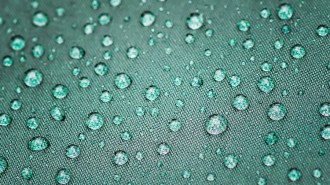
Bulky molecules mimic some properties of PFAS without their long-lasting chemical bonds and could replace PFAS in some water-repelling applications.
- Space
Fermenting miso in orbit reveals how space can affect a food’s taste
A miso test on the International Space Station shows fermenting food is not only possible in space, it adds nuttier notes to the Japanese condiment.
- Chemistry
A new iron compound hints ‘primordial’ helium hides in Earth’s core
Earth’s core could contain helium from the early solar system. The noble gas tucks into gaps in iron crystals under high pressure and temperature.
- Math
The einstein tile rocked mathematics. Meet its molecular cousin
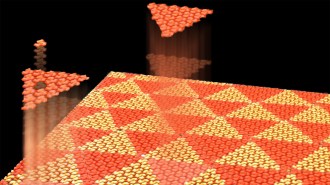
Chemists identify a single molecule that naturally tiles in nonrepeating patterns, which could help build materials with novel electronic properties.
- Planetary Science
Ancient Mars wasn’t just wet. It was cold and wet
Mars may once have held enough water to fill oceans and form coastlines. The planet’s red dust contains water and likely formed in cold conditions.
- Health & Medicine
Toxic dangers lurk in LA, even in homes that didn’t burn
Urban wildfires like LA’s make harmful chemicals from burning plastics and electronics that can make indoor air dangerous for months.
- Chemistry
A new microbead proves effective as a plastic-free skin scrubber
The nonplastic polymer cleaned up eyeliner and permanent marker and broke down into molecules related to sugar and amino acids.
- Life
Sheep earwax can record a dangerous diet
Sheep that eat death camas plants record the toxic meal in their earwax, a goopy health data repository that researchers are increasingly exploring.
- Materials Science
Starchy nanofibers shatter the record for world’s thinnest pasta
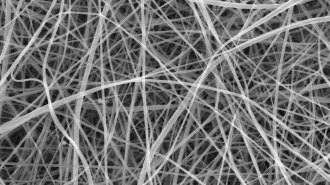
The fibers, made from white flour and formic acid, average just 372 nanometers in diameter and might find use in biodegradable bandages.
- Health & Medicine
Scientists identify a long-sought by-product of some drinking water treatments
Chlorine-based water treatments create many by-products, but one has been elusive. Its identification sets the stage for studying its health effects.