6,913 results
6,913 results for: Bears
- Anthropology
American Association of Physical Anthropologists meeting
Perhaps the oldest swatch of hominid skin yet found and –tzi the iceman’s Neandertal genetics are among the highlights from the physical anthropology meeting.
- Humans
Human ancestors had taste for meat, brains
A mix of hunting and scavenging fed carnivorous cravings of early Homo species.
- Earth
Toxic waste sites may cause health problems for millions
Exposures to lead and chromium represent particular problems, study finds in India, Indonesia and Philippines.
- Life
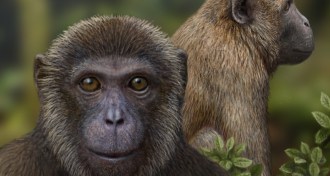
Fossils point to ancient ape-monkey split
Apes and monkeys split from a common ancestor more than 25 million years ago, fossil finds suggest.
- Plants
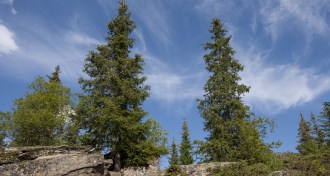
Giant genomes felled by DNA sequencing advances
Complete genetic blueprints have been collected for several conifer species.
- Life
Complex life hit freshwater early
Tiny fossils in Scottish rock show that cells with nuclei had spread beyond the seas by a billion years ago.
- Humans
Stone Age cold case baffles scientists
Stone-tool makers who hunkered down near Arctic Circle left uncertain clues to their identity.
-
- Animals
Just turn your back, Mom
A female in a species of legless amphibians called caecilians nourishes her youngsters by letting them eat the skin off her back.
- Anthropology
Digging up debate in a French cave
A scientific debate has broken out over whether a French cave excavated more than 50 years ago contains evidence of separate Stone Age occupations by Neandertals and modern humans.
- Earth
Blast Survivors: Fragments of asteroid found in ancient crater
Pieces of an asteroid that blasted a 70-kilometer-wide crater in southern Africa millions of years ago may have been found intact inside the thick layer of once-molten rock that the impact left behind.
- Paleontology
Remains may be an evolutionary relic
Fossils recently found in southwestern China may be of a lineage that originated long before the Cambrian explosion of biodiversity, when most major groups of animals first appeared in the fossil record.