1,576 results
1,576 results for: Bees
- Life
The Endangered Species Act is turning 50. Has it succeeded?
After 50 years, this landmark law has kept many species alive — but few wild populations have recovered enough to come off the “endangered” list.
- Math
How geometry solves architectural problems for bees and wasps
Adding five - and seven - sided cells in pairs during nest building helps the colonyfit together differently sized hexa gonal cells , a new study shows.
- Life
Flowers pollinated by honeybees make lower-quality seeds
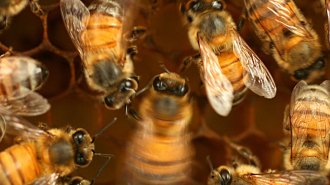
Honeybees are one of the most common pollinators. But their flower-visiting habits make it harder for some plants to produce good seeds.
- Life
‘Polyester bees’ brew beer-scented baby food in plastic cribs
Ptiloglossa bees’ baby food gets its boozy fragrance from fermentation by mysteriously selected microbes.
- Ecosystems
Marjorie Weber explores plant-protecting ants and other wonders of evolution
Cooperation across the tree of life is an understudied driver of evolution and biodiversity, Marjorie Weber says.
-
The animal kingdom never ceases to amaze
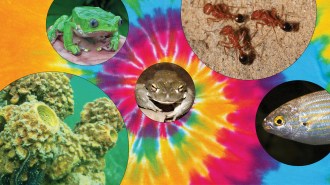
Editor in chief Nancy Shute revels in the wonder of animals, from psychedelic toads to extinct pterosaurs.
- Science & Society
Here are the Top 10 threats to the survival of civilization
These aren’t just movie scenarios. From aliens and asteroids to pandemics, war and climate change, civilization as we know it is at risk.
- Life
Honeybees waggle to communicate. But to do it well, they need dance lessons
Young honeybees can’t perfect waggling on their own after all. Without older sisters to practice with, youngsters fail to nail distances.
- Life
How some beetles ‘drink’ water using their butts
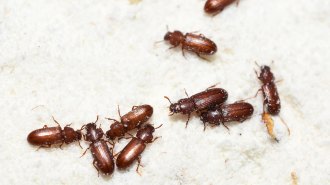
Red flour beetles, a major agricultural pest, suck water out of the air using special cells in their rear ends, a new study suggests.
- Animals
The Sonoran Desert toad can alter your mind — it’s not the only animal
Their psychedelic and other potentially mind-bending compounds didn't evolve to give people a trip.
- Animals
Invasive yellow crazy ants create male ‘chimeras’ to reproduce
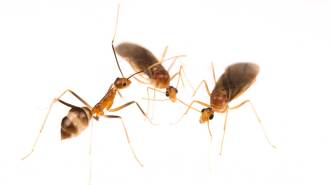
Yellow crazy ants are first known species where chimerism is required in males: Each of their cells holds DNA from just one of two genetic lineages.
- Animals
Here are 3 people-animal collaborations besides dolphins and Brazilians
Dolphins working with people to catch fish recently made a big splash. But humans and other animals have cooperated throughout history.