4,033 results
4,033 results for: Dogs
-
From the October 31, 1931, issue
CATS WERE WILD IN ANCIENT SOUTHWEST In ancient America, it was bad luck to meet a cat on a dark night. All the cats that the Indians knew were wildcats. Dogs were tamed and learned to follow Indian hunters and Indian children around, but cats walked by themselves, very wild and alone. The Indian pottery […]
- Humans
Letters from the May 12, 2007, issue of Science News
Saw right through it E. Fred Schubert and his colleagues are to be congratulated for developing an improved antireflective coating (“The New Black: A nanoscale coating reflects almost no light,” SN: 3/3/07, p. 132). But the coating would not make a lens “absorb” more light. Rather, it would help the lens “propagate” the light. Nathaniel […]
- Physics
Gravity’s Ghost and Big Dog
Sociologist Harry Collins chronicles the occasionally heated (and often arcane) debates among scientists studying gravitational waves.
- Psychology
Farming practices have shaped thinking styles
The different levels of cooperation required to grow rice and wheat have sown psychological differences within China and possibly between East Asia and the West.
- Life
‘The Amoeba in the Room’ uncloaks a hidden realm of tiny life
Mycologist Nicholas Money reveals the secret (and dramatic) lives of amoebas, bacteria, fungi and other often-overlooked microbes in The Amoeba in the Room: Lives of the Microbes.
- Animals
Pets’ rights explored in ‘Citizen Canine’
Science journalist David Grimm describes pet's progression towards full citizenship.
- Neuroscience
Sunbathing may boost endorphins in the body and brain
UV light makes mice churn out a molecule that is a cousin of morphine and heroin, a finding that may explain why some people seek out sunshine.
- Animals
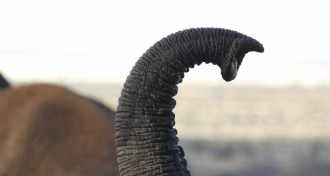
Elephant’s big nose wins most sensitive sniffer
A genetic survey reveals that African elephants harbor more smell sensors than any other known animal.
- Ecosystems
Arctic melting may help parasites infect new hosts
Grey seals and beluga whales encounter killer microbes as ranges change.
- Neuroscience
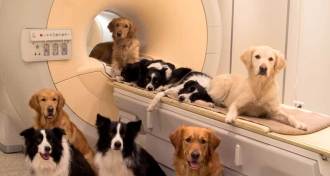
Like people, dogs have brain areas that respond to voices
MRI study may help explain how pups understand human communication.
- Neuroscience
Me, Myself, and Why
Me, Myself, and Why is an ambitious effort to dissect the hodgepodge of genetic and environmental factors that sculpt people’s identities.
- Health & Medicine
Experimental drug no Methuselah formula
Compound lets mice live healthier lives but doesn't extend life span.