8,311 results
8,311 results for: Fish
-
Snap, Whistle, Pop at Sea
The depths of the ocean are a noisy place. Sample the sounds of the croaker fish and other denizens of the sea. Listen to the calls of various marine mammals and the racket created by a bed of snapping shrimp. Then ponder the pinging pitter-patter of rain as heard from down under. Go to: http://www.jandaenterprises.com/sounds.htm, […]
- Humans
From the November 22, 1930, issue
alt=”Click to view larger image”> AMERICAN SHORE WATERS YIELD FANTASTIC FISH Citizens of the American midlands will soon have an opportunity to become acquainted with one of the world’s most fantastic fishes, when a group of long-horned sculpins, captured by staff members of the Marine Biological Laboratory at Woods Hole, Mass., is placed on exhibition […]
-
Live from Antarctica
Mixing live Webcasts with interactive presentations, San Francisco’s Exploratorium documents a journey to Antarctica. Team members interview scientists, dive and film underwater, climb a volcano, and visit a vast frigid desert. The Web site also features reference material on a variety of topics, including how fish adapt to icy waters, and views of the continent’s […]
- Humans
From the January 16, 1932, issue
A PHARAOH’S RIGHTHAND MAN Add the name of Ken-Amun, ambitious Egyptian politician, a Pharaoh’s righthand man, to the list of unusual personalities from ancient Egypt. Ken-Amun’s tomb, cut into a rocky hillside in the Valley of the Kings, has been known for almost a century, but has been strangely neglected. Now, it has been thoroughly […]
-
From the February 27, 1932, issue
PUSSY WILLOW Florists shops have long been offering big, beautiful, and expensive wands of pussy willows. But now the willow trees and bushes out of doors are putting forth their own offerings: smaller catkins, perhaps, but with the authentic tang of the wild about them. Harmless, charming, furry wild kittens, beloved of children everywhere! Pussy […]
- Animals
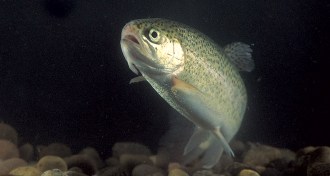
Frustrated fish get feisty
Smaller rainbow trout become more aggressive towards bigger fish when they don’t their usual treats.
- Psychology
Babies learn some early words by touch
Tactile cues provided by caregivers give infants a leg up on learning words for body parts.
- Climate
Crop nutrients may drop as carbon dioxide rises
Many staple grains and legumes pack 5 to 10 percent less iron, zinc and protein when grown at carbon dioxide levels expected midcentury.
- Life
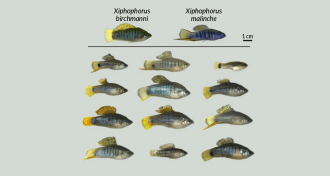
Genes gives clues to outcome of species interbreeding
Genetics provides clues to why hybrid river fish formed a subspecies but insects formed a new species.
- Climate
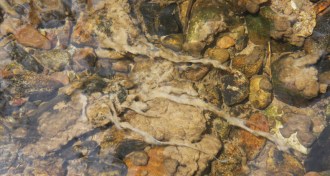
Environmental change may spur growth of ‘rock snot’
A controversial new theory suggests alga that forms rock snot isn’t an invader, but a low-key species native to many rivers.
- Animals
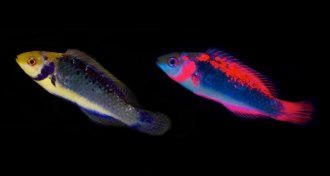
Reef fish get riled when intruders glow red
A male fairy wrasse gets feisty when he can see a rival’s colorful fluorescent patches.
- Life
Hatcheries’ metal can disrupt steelhead magnetic sense
Growing up in magnetic fields distorted by pipes and electronics confounds young fish’s inherited map sense.