1,428 results
1,428 results for: Whales
- Animals
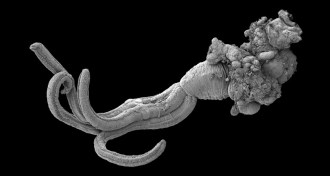
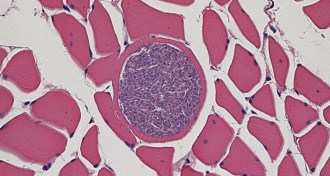
Antarctic waters may shelter wrecks from shipworms
Ocean currents and polar front form 'moat' that keeps destructive mollusks at bay.
- Life
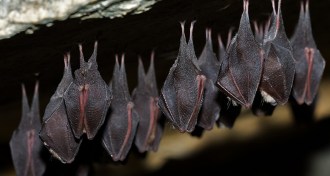
Many genes in dolphins and bats evolved in the same way to allow echolocation
Widespread changes scattered across the genomes of distantly related species cooperated to craft the trait.
- Animals
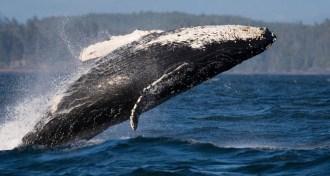
Humpbacks make a comeback in British Columbia
Whale numbers double at a feeding site in Canada.
- Animals
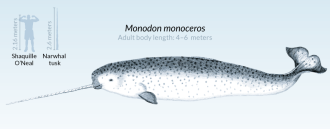
Narwhal has the strangest tooth in the sea
Sometimes called the unicorn of the sea, the male narwhal’s tusk is actually a tooth. Narwhals detect changes in water salinity using only these tusks, a new study finds.
- Humans
Letters from the March 1, 2008, issue of Science News
Big evolvers Regarding “Whales Drink Sounds: Hearing may use an ancient path” (SN: 2/9/08, p. 84), I have heard that whales evolved millions of years ago into their present form, including their very large brains. We humans must be relatively recent in terms of our brain structures. Are there data concerning evolutionary development in whales? […]
- Ecosystems
Arctic melting may help parasites infect new hosts
Grey seals and beluga whales encounter killer microbes as ranges change.
- Paleontology
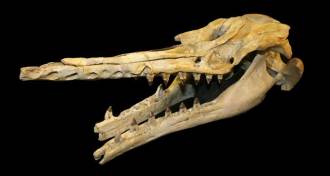
Fossil whale skull hints at echolocation’s origins
Ancestors of toothed whales used echolocation as early as 34 million years ago, analysis of a new fossil skull suggests.
- Humans
Letters from the December 23 & 30, 2006, issue of Science News
Playing dead is a lively topic I am amazed that “Why Play Dead?” (SN: 10/28/06, p. 280) concluded that “Scientists have a long way to go to explain why” prey animals play dead. As a veterinarian, I have learned that there are separate centers in the brain dealing with predatory behavior and with hunger. The […]
- Paleontology
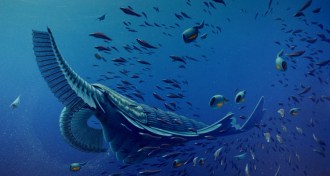
Ancient oceans’ top predator was gentle filter feeder
New fossils suggest that a distant relative of lobsters used bristled limbs to net its prey, not spike it.
- Humans
Letters from the January 7, 2006, issue of Science News
Death in the Americas I was wondering if researchers have given any thought to the idea that in the same way that disease devastated human populations after the European discovery of the Americas, perhaps disease was a contributing factor in the demise of much of the fauna of the Western Hemisphere (“Caribbean Extinctions: Climate change […]
-
-