Delivering oxygen under pressure: the engineering behind HPO.TECH hyperbaric chamber breathing systems and the BIBS mask
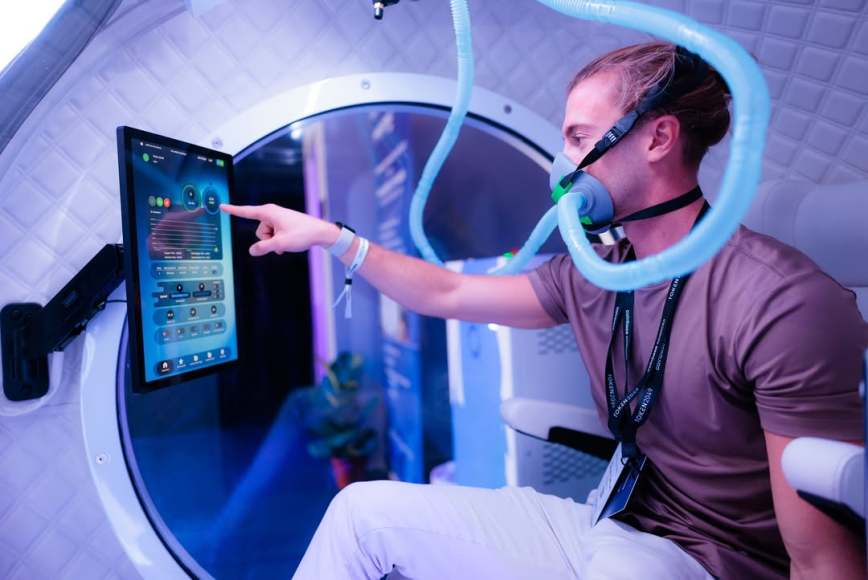
HPO.TECH Istanbul
Hyperbaric oxygen therapy is defined by its pressure. But getting oxygen to the patient is a separate engineering problem, with a narrow set of correct answers.
Hyperbaric oxygen therapy raises the air pressure around a patient so that more oxygen dissolves into the blood. At normal atmospheric pressure, the highest oxygen fraction any device can deliver is 1.0, pure oxygen, and no mask or flow setting pushes past it, as NIH’s StatPearls notes. Raising the pressure is what allows more oxygen into the body: under pressure, oxygen dissolves into blood plasma in proportion to its partial pressure, following Henry’s law, and reaches tissue it would not otherwise saturate. The effect depends on a condition that is hard to engineer: the gas the patient breathes has to be oxygen, at the chamber’s pressure, on every breath.
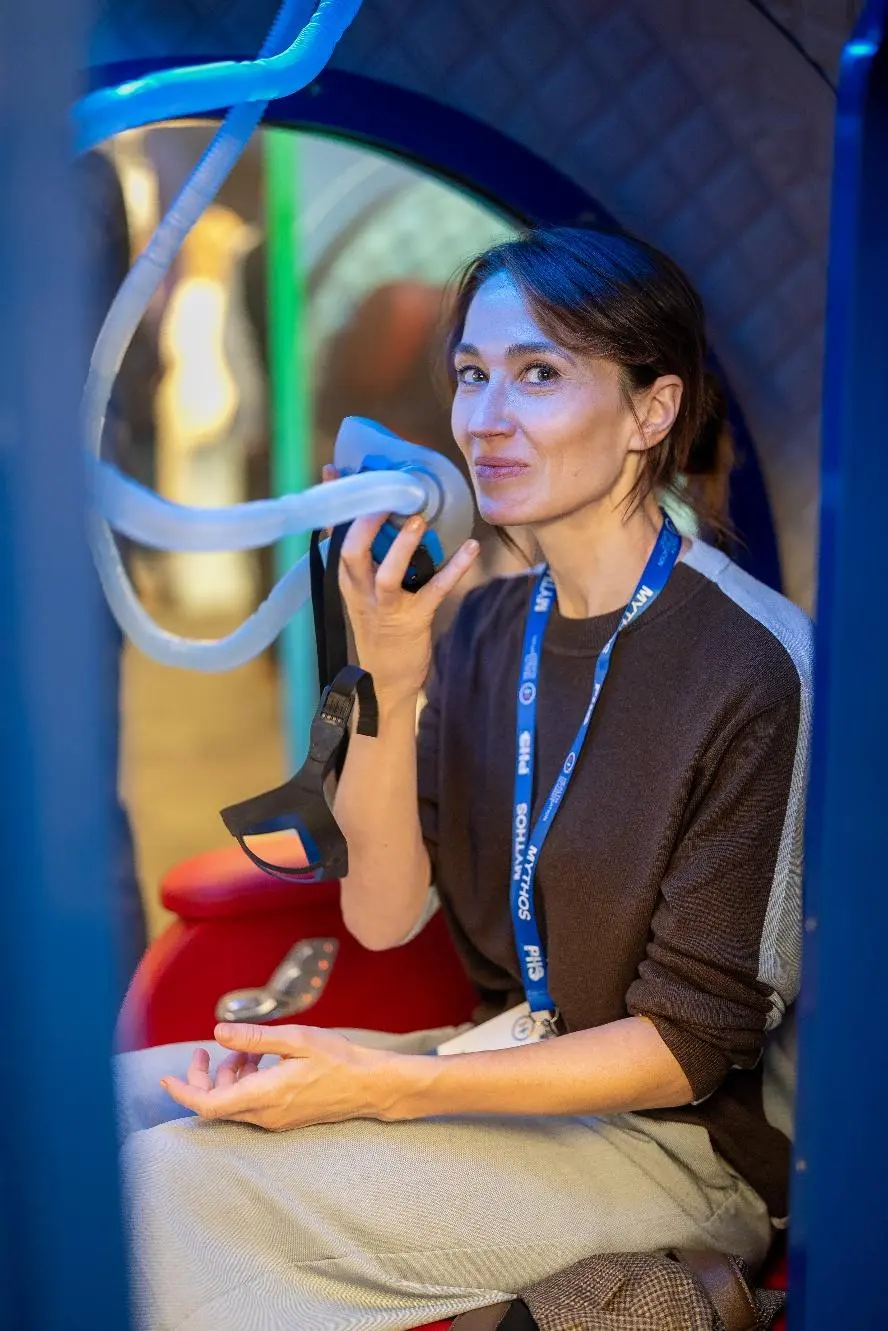
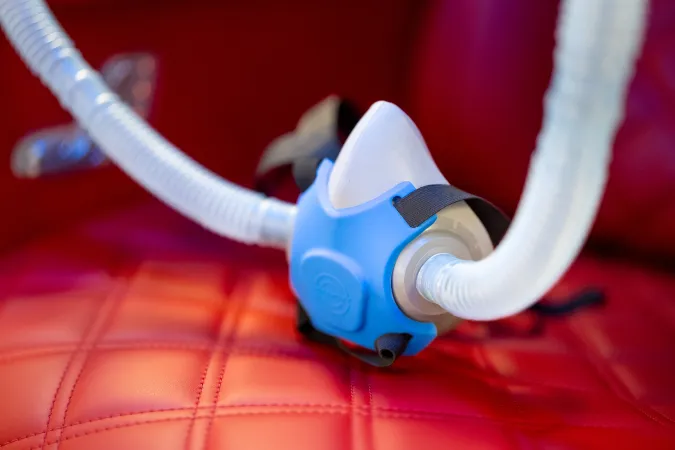
The device that does this in a clinical chamber is a demand-based breathing system, known in the field as a BIBS, or Built-In Breathing System. Its mechanism comes from diving. A scuba regulator supplies gas to a diver on demand at whatever pressure is needed, and a demand valve inside a hyperbaric chamber works the same way. It opens only when the patient inhales, and the slight drop in pressure at the mask releases oxygen for the length of that breath. There is no continuous flow to set. A pilot trial of demand-valve oxygen for treating cluster headache, registered on ClinicalTrials.gov as NCT01298921, described the mechanism precisely: a valve with no flow meter, delivering from zero to around 160 liters a minute, governed entirely by the patient’s respiration rate. The same valve compensates for pressure automatically, so at 2.0 ATA, twice atmospheric pressure, oxygen arrives at the correct partial pressure without manual adjustment.
But a high flow rate does not guarantee a high delivered concentration of oxygen. What determines delivery is the seal between the device and the face. An open interface such as a nasal cannula or a simple mask allows room air to enter with each breath, and the larger the breath, the more that air dilutes the oxygen. Published measurements show the gap. A nasal cannula’s delivered oxygen sits well below its nominal rating, and a non-rebreather mask, sometimes described as delivering close to 100 percent, can fall to roughly 35 to 40 percent under fast breathing, according to analyses in StatPearls and the respiratory literature. A sealed demand mask removes the dilution path, so the concentration supplied and the concentration delivered converge. Bench testing by Divers Alert Network Southern Africa reported the same relationship from the opposite direction: even with a demand valve in place, a loosely fitted mask delivered less oxygen to tissue than a tightly sealed one.
Feeding a demand mask introduces a further constraint, and it is a matter of physics. For oxygen to flow into a breathing circuit, the supply pressure has to exceed the pressure of the patient’s breaths is breathing at. Inside a chamber, that pressure is above atmospheric by definition, so the oxygen source must be a high-pressure one, typically delivering on the order of 20 liters a minute at 5 bar, or about 72.5 psi. A low-pressure oxygen source cannot push gas into a circuit that is already pressurized. This is the reason HPO.TECH oxygen concentrators all work at 5 bar.
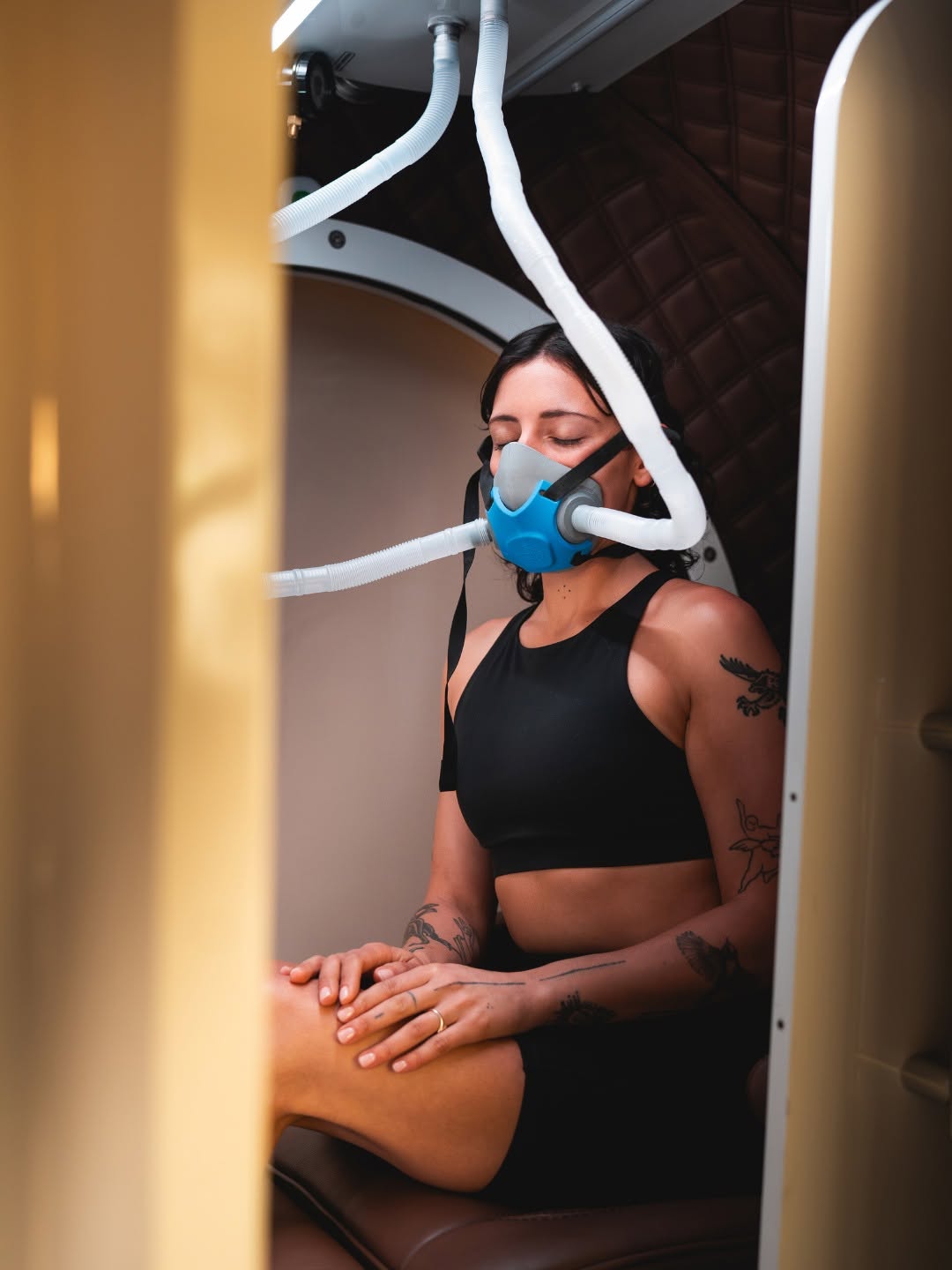
The interface also carries a safety function. A hyperbaric chamber is a sealed volume, and oxygen that escapes a loose mask collects inside it rather than dispersing. Under pressure, an oxygen-enriched atmosphere is a fire hazard, since materials will ignite more easily and burn hotter. NFPA 99, the health care facilities code, limits the oxygen concentration inside a hyperbaric chamber to 23.5 percent. A sealed demand system with an external exhaust keeps the chamber below that limit by design: oxygen goes only into the patient’s lungs, and exhaled gas is routed out of the chamber instead of accumulating in it.
None of this is recent science. Demand regulators have delivered gas to divers for decades, and the physics of partial pressure is older still. The engineering task is one of discipline rather than discovery: building the breathing interface, the oxygen source behind it, and the chamber around it so that the gas a patient breathes matches what a protocol specifies, on every breath, across a full session.
HPO.TECH designs hyperbaric, hypobaric, and multibaric systems in which the chamber, the compressor, and the high-pressure oxygen source are built to work together in sync, with a demand-based breathing system (BIBS) as the delivery interface, and with an oxygen concentrator at 5 bar to truly deliver the oxygen when the chamber is pressurized.
More information is available at www.hpotech.com.