Anthropology
- Science & Society
Pronatalists want more babies. Their solutions aren’t rooted in science
Conservative pronatalists want a return to the traditional nuclear family. But that family structure is at odds with how humans evolved.
- Archaeology
A new study questions when people first reached South America
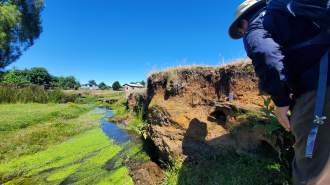
Data suggest people lived at Chile’s Monte Verde site thousands of years later than thought, challenging key “pre-Clovis” evidence. Not all agree.
- Anthropology
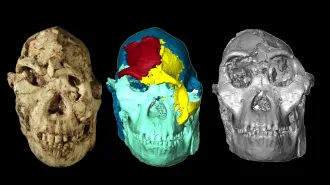
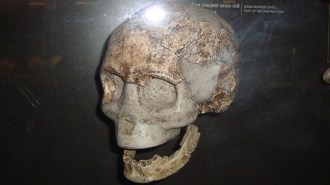
The ancient human ancestor ‘Little Foot’ gets a new face
A new digital reconstruction of the face of an early Australopithecus specimen helps add details about the origins of our own species.
- Anthropology
Mosquitoes began biting humans more than a million years ago
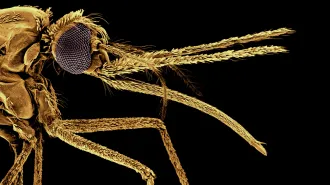
A DNA analysis suggests mosquitoes shifted from nonhuman primates to early humans nearly 2 million years ago.
- Archaeology
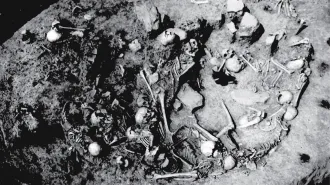
Iron Age mass grave may hold unusual victims: mostly women and children
A land dispute may have led to the massacre 3,000 years ago, suggesting Europe’s transition to farming wasn’t always peaceful.
- Anthropology
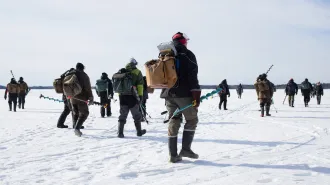
When the fish stop biting, ice fishers follow the crowd
Study showcases how modern-day foragers stick together when seeking food. Such social forces could help explain the emergence of complex thinking.
- Anthropology
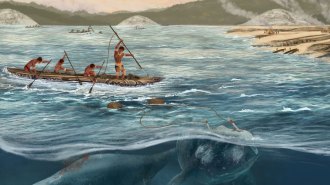
Whaling may have started 1,500 years earlier than already known
Specialized whale-bone harpoons from southern Brazil dating back 5,000 years suggest that Indigenous groups in the area were whalers.
- Archaeology
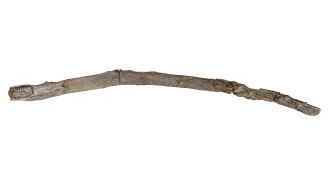
This ancient stick may be the world’s oldest handheld wooden tool
These 430,000-year-old wooden tools from Greece are a rare find and provide a glimpse at the technical know-how of our early human ancestors.
- Anthropology
This hand stencil in Indonesia is now the oldest known rock art
The work suggests early Homo sapiens developed enduring artistic practices as they moved through the islands of Southeast Asia.
- Anthropology
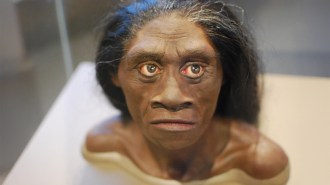
Drought may have doomed the ‘hobbits’ of Flores
Stalagmite data suggest Homo floresiensis faced prolonged drought that stressed both them and their prey, contributing to their disappearance.
- Anthropology
Big Neandertal noses weren’t made for cold
Tiny cameras threaded inside a Neandertal skull provide evidence that their big noses were not an adaptation to cold climates.
- Humans
Ancient southern Africans took genetic evolution in a new direction
An ancient, shared set of human-specific genes underwent changes in a geographically isolated population after around 300,000 years ago, scientists say.