Computing
- Computing
‘The Imitation Game’ entertains at the expense of accuracy
Inaccuracies weaken “The Imitation Game,” an otherwise enjoyable film about Alan Turing breaking the Enigma code during World War II.
- Quantum Physics
Milestone algorithm runs on quantum computer
An algorithm proposed two decades ago that demonstrated the benefit of using quantum mechanics to solve certain problems has finally been run on a quantum computer.
- Math
Spirals inspire walking aids for people with disabilities
Long admired for their beauty, spirals have inspired a shoe that may help disabled people walk. The shapes make for a better crutch and an entertaining skateboard as well.
- Science & Society
E-commerce sites personalize search results to maximize profits
Travel and retail websites alter search results depending on whether consumers use smartphones or particular web browsers.
- Computing
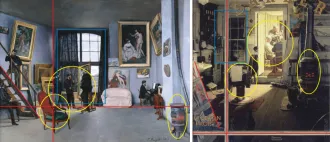
Computer program reveals artists’ influences
The algorithm can figure out a particular painting’s style — whether it’s abstract, impressionist or Baroque, for example — and tease out possible connections among artists.
- Tech
To have a sound mind, a brain needs a body
Replicating human intelligence in robots requires the right materials for brain-body-environment interactions.
- Tech
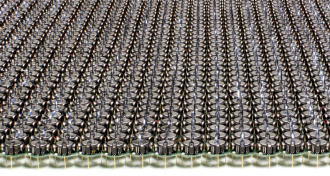
Robot swarm takes many shapes
One Kilobot is not very smart. But 1,000 can follow simple instructions to assemble into multiple shapes without human intervention.
- Materials Science
Magnets get flipped by light
Controlling magnetism with lasers could lead to faster computer hard drives.
- Computing
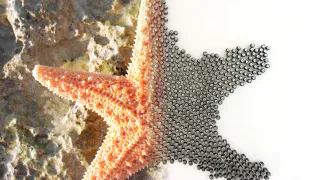
Thousand-robot swarm self-assembles into complex shapes
A swarm of a thousand tiny robots can now self-assemble into complex shapes, suggesting scientists have taken a step forward in engineering collective artificial intelligence
- Math
Father-son mathematicians fold math into fonts
MIT’s Erik and Martin Demaine create puzzle typefaces to test new ideas.
- Computing
Brain-inspired computer chip mimics 1 million neurons
By processing data in parallel, computer chips modeled after the human brain could perform certain tasks, such as pattern recognition, faster and more energy-efficiently than traditional computers.
- Computing
Barrel jellyfish may hunt with new kind of math
Barrel jellyfish use a new type of mathematical movement pattern to forage for food, a new study suggests.