Environment
- Environment
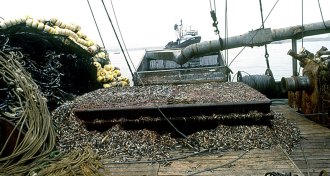
Most fish turned into fishmeal are species that we could be eating
Millions of tons of food-grade fish are turned into fishmeal for aquaculture and agriculture.
- Chemistry
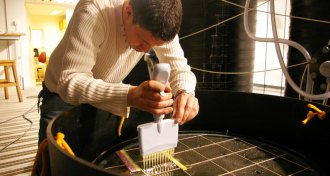
New, greener catalysts are built for speed
Researchers are designing catalysts to move chemical reactions without using precious metals, or at least using less of them.
- Oceans
Climate change may boost toxic mercury levels in sea life
Increased runoff to the ocean due to climate change could raise neurotoxic mercury in coastal sea life by disrupting the base of the food web.
- Environment
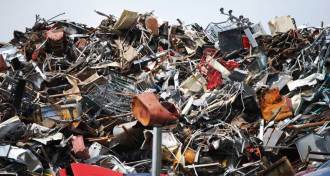
Humans’ stuff vastly outweighs humans
The human-made technosphere weighs 30 trillion tons and surpasses the natural biosphere in mass and diversity, researchers estimate.
- Earth
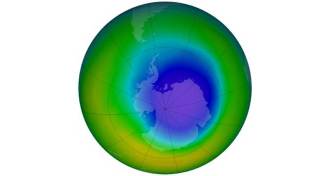
Year in review: Ozone hole officially on the mend
Research this year confirms that the Antarctic ozone hole is healing — an international success attributed to cooperation and new technologies.
- Genetics
Epigenetic marks may help assess toxic exposure risk — someday
Exposure to things in the environment may change chemical tags on DNA and proteins, but it’s still unclear how to use that data to assess health risks.
- Climate
CO2 emissions stay steady for third consecutive year
Global emissions of carbon dioxide from human activities will probably see almost no increase in 2016 despite economic growth.
- Environment
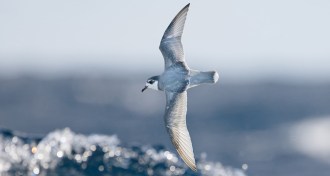
Ocean plastic emits chemical that may trick seabirds into eating trash
Some seabirds might be eating plastic because it emits a chemical that smells like food.
- Environment
Ocean plastic emits chemical that tricks seabirds into eating trash
Some seabirds might be eating plastic because it emits a chemical that smells like food.
- Health & Medicine
50 years ago, noise was a nuisance (it still is)
In 1966, scientists warned of the physical and psychological dangers of a louder world.
- Animals
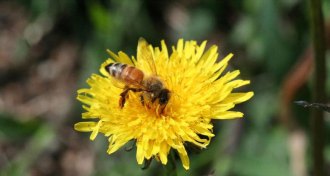
Bees take longer to learn floral odors polluted by vehicle fumes
Car and truck exhaust mingling with a floral scent can slow down the important process of honeybees learning the fragrance of a flower.
- Environment
New desalination tech could help quench global thirst
Designed with better, more energy-efficient materials, next-generation desalination plants may offer a way to meet the world’s growing need for freshwater.